A fisheries exchange in Belize has brought fishers and seafood businesspeople from the Eastern Caribbean face-to-face with Belizean fishers, cooperatives, fisheries managers, and conservation partners, sparking new conversations about how the Caribbean can strengthen trade in lobster and other seafood products while learning from successful fisheries management practices across the region.
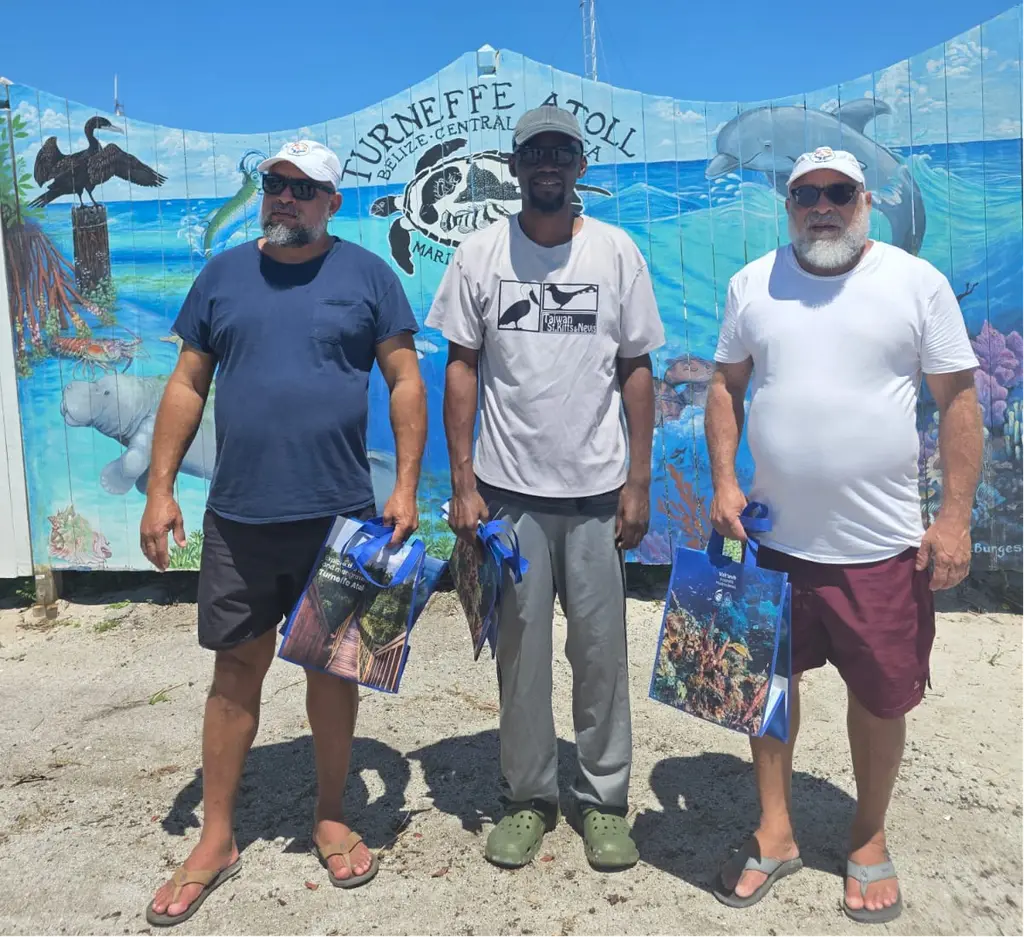
From September 15–19, 2026, Mr. Jack Spencer and Mr. Marcus Spencer of St. Kitts and Nevis, along with Mr. Calvin Josiah of St. Martin, visited Belize to examine the country's lobster industry and explore opportunities to increase trade in fish and fish products between Belize and the Eastern Caribbean.
The Caribbean Regional Fisheries Mechanism (CRFM) and the Caribbean Network of Fisherfolk Organisations (CNFO) coordinated the week's program, with support from government agencies, fisher cooperatives, conservation partners, and local fishers in Belize.
The exchange took participants from cooperative processing facilities and government offices to fishing camps and co-management sites on Turneffe Atoll, offering a rare opportunity to follow Belize's lobster industry from sea to market.
Seeing the lobster value chain first-hand
The program began on September 15 with a meeting with the Belize Fishermen Cooperative Association (BFCA) Ltd., during which participants exchanged experiences and discussed the operations of Belize's fishing cooperative sector.
The delegation subsequently toured the facilities of the National Fishermen Producers Cooperative Society Ltd. (NFPCSL) and the Northern Fishermen Cooperative Society Ltd. (NFCSL).
The visits provided firsthand exposure to lobster receiving, handling, processing, and market preparation. Participants observed how value is added after lobster arrives at the cooperative and how the product moves through the supply chain to consumers.
The discussions also examined the role of cooperatives in organizing fishers, maintaining product quality, facilitating market access, and generating greater economic value from fisheries resources.
For the visiting fish businesspeople, the experience provided an opportunity to explore potential commercial relationships with Belizean suppliers and to understand better what would be required to increase the movement of lobster and other seafood products between Belize and Eastern Caribbean markets.
Understanding how Belize manages its fisheries
On September 16, the delegation met with representatives of Belize's Ministry of the Blue Economy. Participants received an overview of the history and development of the country's lobster fishery, its operations, and the legal and institutional mechanisms governing the industry.
Later that day, the group met with the CRFM for a broader regional discussion on lobster fisheries, seafood markets, and the opportunities and challenges of expanding intra-Caribbean trade in fish and fish products.
The program continued September 17 with detailed discussions hosted by the Belize Fisheries Department. Participants examined lobster and other fisheries operations, management arrangements, trade requirements, legislation, and compliance and enforcement.
These discussions underscored a central message of the exchange: building a profitable fisheries sector must go hand in hand with the responsible management of the resources that fishers, businesses and coastal communities depend on.
The Belize Fisheries Department, the Turneffe Atoll Sustainability Association (TASA), and CRFM also finalized arrangements for the delegation to observe fisheries management and lobster operations at Turneffe Atoll directly.
Taking the exchange to the fishing grounds
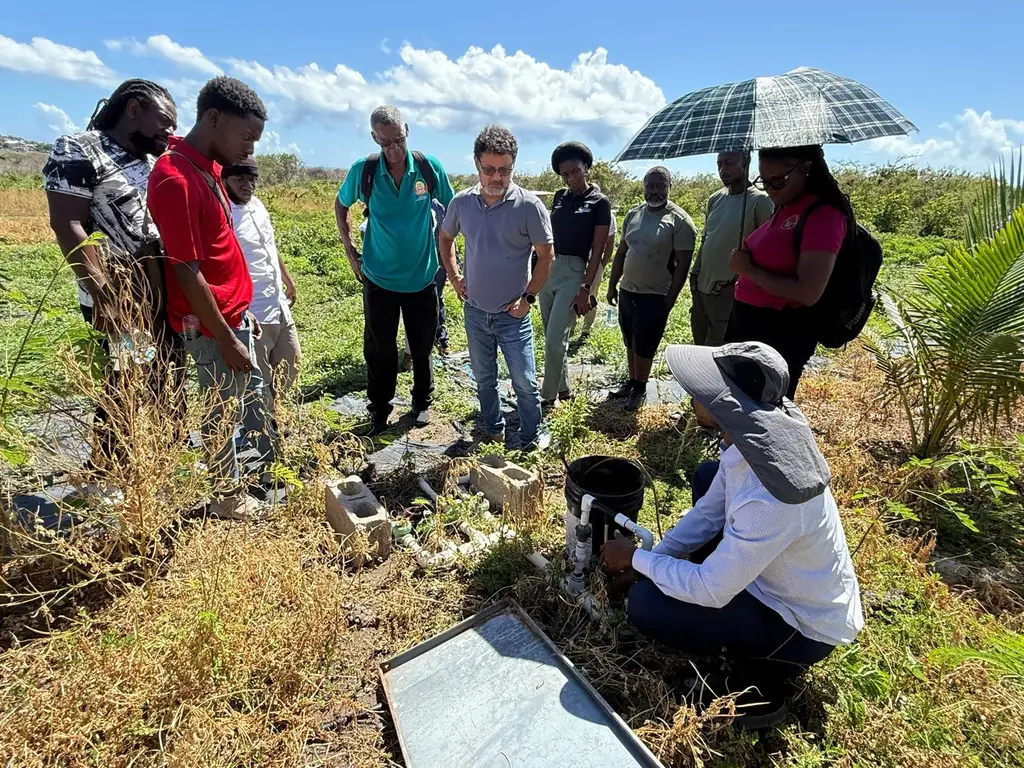
On September 19, the program moved from meeting rooms to the sea as TASA led the delegation on a field visit to Turneffe Atoll, supported by the Belize Fisheries Department, CRFM, and Belizean fisher Jason Young.
At Mr. Young's lobster fishing camp, participants saw how lobster traps are constructed and learned about the preparations Belizean fishers make for the lobster season. The encounter provided an opportunity for direct fisher-to-fisher exchange on fishing methods, practical experience, and the realities of operating a lobster fishing business.
The delegation then visited the Caye Bokel co-management site, which supports fisheries management in the southern portion of the Turneffe Atoll Marine Reserve, followed by Calabash Caye, a co-management site serving the reserve's middle portion.
The field experience underscored the importance of partnerships among fishers, government, and conservation organizations for sustainably managing valuable fisheries resources.
Participants see potential for wider Caribbean exchanges
The visiting delegation praised the hospitality and openness of the organizations and individuals who supported the program.
Jack Spencer expressed appreciation for the willingness of Belizean fisherfolk, the Government of Belize, TASA and CRFM to accommodate the delegation and openly share their experiences.
Marcus Spencer said he was impressed by the fisheries management practices he observed and would like other Caribbean fishers to benefit from similar opportunities.
“The fisheries in Belize are well managed, and I would love for other fishers in the Caribbean to have similar experiences,” Spencer said.
Calvin Josiah highlighted the potential for greater fisheries trade between Belize and the Eastern Caribbean, while noting that transportation and logistics will be critical to transforming commercial interest into sustainable trade.
The observation points to a wider challenge facing intra-regional seafood commerce: ensuring that transportation, cold-chain systems, distribution arrangements and other logistics can efficiently connect producers with Caribbean markets.
Connecting Caribbean fishers, businesses, and markets
The Belize exchange demonstrated the value of practical fisher-to-fisher, cooperative-to-cooperative, and business-to-business exchanges to strengthen Caribbean fisheries. Such initiatives can enable fishers to learn techniques directly from their counterparts, expose fisheries entrepreneurs to processing and value-addition opportunities, strengthen relationships among cooperatives, and connect seafood producers with prospective buyers.
The visiting fishers and businesspeople thanked the BFCA, NFPCSL, NFCSL, the Ministry of the Blue Economy, the Belize Fisheries Department, TASA, CNFO, and CRFM, as well as the local fishers and other partners who contributed to the program. The delegation expressed hope that the visit will mark the start of longer-term cooperation between Belize and fisheries stakeholders in St. Kitts and Nevis, St. Martin, and the wider Caribbean.
The opportunity extends beyond lobster. Stronger regional connections could support increased trade in Caribbean seafood, greater value addition, stronger fisheries enterprises, improved food and nutrition security, and more resilient livelihoods for fishing communities. For fishers and fisheries entrepreneurs elsewhere in the region, the Belize experience also invites them to imagine what similar exchanges could achieve.
The Caribbean Sea does not have to separate the region's fishing communities and markets. Through greater cooperation, knowledge exchange, and trade, it can increasingly become the link that connects them.