/ Apr 21, 2026
Trending

News Elementor

RECENT NEWS

CDB Approves EU-Backed Grant to Strengthen CDEMA

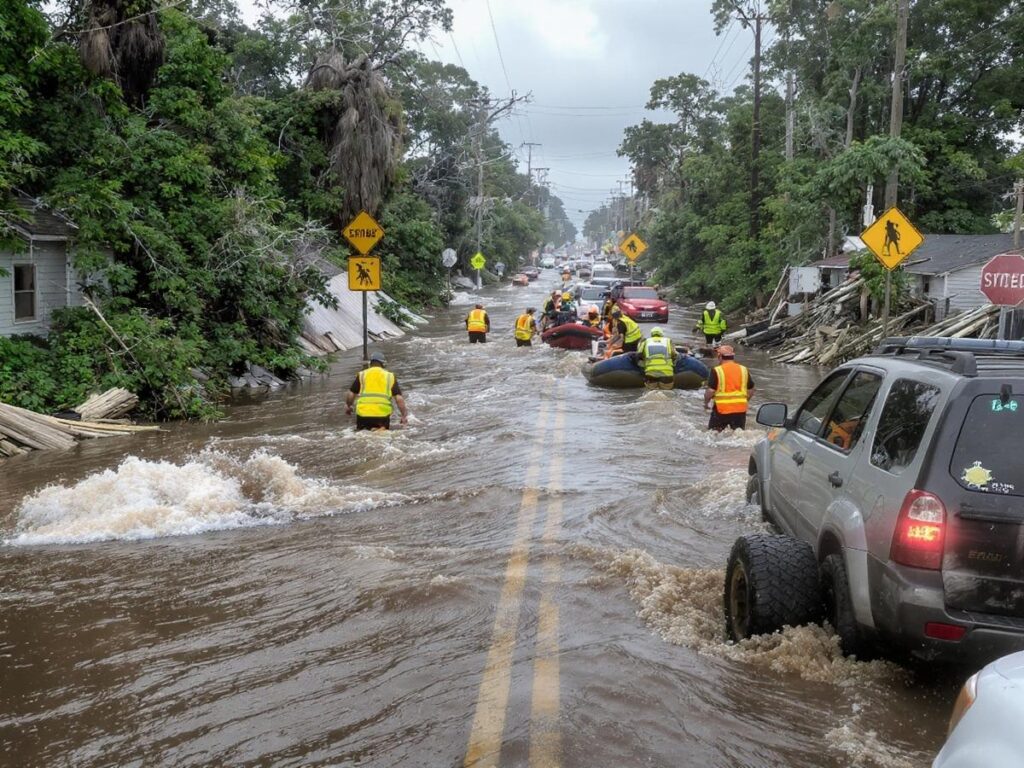
The Caribbean Development Bank (CDB) has approved a technical assistance grant of USD346,000 to the Caribbean Disaster Emergency Management Agency (CDEMA) to support a comprehensive institutional assessment aimed at strengthening the Agency’s ability to support Caribbean countries before, during and after disasters.

CDEMA is the CARICOM agency that coordinates disaster risk management across the region. Through this support, CDEMA will hire specialist consultants to examine its organisational structure, working systems and staffing arrangements. The review is expected to provide practical recommendations to help the agency work more effectively and remain sustainable over time. The findings are intended to guide future changes and help CDEMA coordinate regional responses in the context of increasing climate and disaster risk.

Underscoring the importance of the investment, Mr. O’Reilly Lewis, Director of Projects at CDB, said, “Climate change is driving more intense natural hazards across the Caribbean, and that reality places growing demands on regional disaster management systems. CDEMA is integral to how countries prepare for and respond to emergencies, and this technical assistance will help ensure the Agency has the right structure, skills, and systems to deliver on its mandate today and into the future.”

The grant is being financed under the Caribbean Action for Resilience Enhancement (CARE) Programme, which is funded by the European Union through the Intra-African Caribbean Pacific European Union Natural Disaster Risk Reduction Programme.

Fiona Ramsey, Ambassador of the European Union to Barbados, the Eastern Caribbean States, and OECS, stated: “The European Union is proud to support the Caribbean Disaster Emergency Management Agency in this important effort to strengthen regional disaster risk management. As climate-related challenges intensify, enhancing CDEMA’s institutional capacity is essential to safeguarding lives, livelihoods, and sustainable development across the Caribbean.

This initiative reflects the European Union’s enduring commitment to its partnership with the Caribbean, including the renewed priorities on disaster risk management agreed between Prime Minister Mia Mottley, in her capacity as Chair of CARICOM at that time, and President of the European Commission, Ursula von der Leyen. Together, we are advancing a shared vision of resilience through a reliable partnership”.

The consultancy will include a comprehensive organisational review; an analysis of skills and competencies to identify critical gaps; and the development of a detailed action plan to address identified needs, including recommendations for an updated organisational structure. It will also review human resource practices with attention to gender equality and will develop a Gender Policy and Operational Strategy covering recruitment, retention, promotion, and compensation.

Ms. Elizabeth Riley, Executive Director of CDEMA,said: “This consultancy marks a pivotal step in CDEMA’s evolution as we position the Agency for both present demands and future challenges. Under Strategic Objective 4 of our 2022–2027 Strategic Plan, we are committed to transforming CDEMA into a stronger, more agile, and technically driven organisation, equipped with the skills and systems required to meet the growing complexity of disaster risk management in the Caribbean.

We are proud to partner with the European Union and the Caribbean Development Bank on this game-changing initiative, which will modernise our organisational structure and enhance our capacity to serve Participating States with excellence, innovation, and impact.” 

The institutional assessment forms the first phase of a broader reform agenda aimed at placing CDEMA on a more secure and sustainable footing. Its results will also inform parallel work led by the World Bank to establish a Multi-Source Trust Fund, intended to provide stable, long-term financing for the Agency. Together, these initiatives are designed to bolster CDEMA’s ability to fulfil its Comprehensive Disaster Management mandate across mitigation, preparedness, response, and recovery.

Implementation of the EU-funded, CDB-supported technical assistance is scheduled to begin in May 2026. The project is directly aligned with CDB’s 10-Year Strategic Plan 2026–2035, which identifies the strengthening of regional institutions as a vital catalyst for building resilience, accelerating growth, and facilitating sustainable development.

The Caribbean Development Bank (CDB) has approved a technical assistance grant of USD346,000 to the Caribbean Disaster Emergency Management Agency (CDEMA) to support a comprehensive institutional assessment aimed at strengthening the Agency’s ability to support Caribbean countries before, during and after disasters.

CDEMA is the CARICOM agency that coordinates disaster risk management across the region. Through this support, CDEMA will hire specialist consultants to examine its organisational structure, working systems and staffing arrangements. The review is expected to provide practical recommendations to help the agency work more effectively and remain sustainable over time. The findings are intended to guide future changes and help CDEMA coordinate regional responses in the context of increasing climate and disaster risk.

Underscoring the importance of the investment, Mr. O’Reilly Lewis, Director of Projects at CDB, said, “Climate change is driving more intense natural hazards across the Caribbean, and that reality places growing demands on regional disaster management systems. CDEMA is integral to how countries prepare for and respond to emergencies, and this technical assistance will help ensure the Agency has the right structure, skills, and systems to deliver on its mandate today and into the future.”

The grant is being financed under the Caribbean Action for Resilience Enhancement (CARE) Programme, which is funded by the European Union through the Intra-African Caribbean Pacific European Union Natural Disaster Risk Reduction Programme.

Fiona Ramsey, Ambassador of the European Union to Barbados, the Eastern Caribbean States, and OECS, stated: “The European Union is proud to support the Caribbean Disaster Emergency Management Agency in this important effort to strengthen regional disaster risk management. As climate-related challenges intensify, enhancing CDEMA’s institutional capacity is essential to safeguarding lives, livelihoods, and sustainable development across the Caribbean.

This initiative reflects the European Union’s enduring commitment to its partnership with the Caribbean, including the renewed priorities on disaster risk management agreed between Prime Minister Mia Mottley, in her capacity as Chair of CARICOM at that time, and President of the European Commission, Ursula von der Leyen. Together, we are advancing a shared vision of resilience through a reliable partnership”.

The consultancy will include a comprehensive organisational review; an analysis of skills and competencies to identify critical gaps; and the development of a detailed action plan to address identified needs, including recommendations for an updated organisational structure. It will also review human resource practices with attention to gender equality and will develop a Gender Policy and Operational Strategy covering recruitment, retention, promotion, and compensation.

Ms. Elizabeth Riley, Executive Director of CDEMA,said: “This consultancy marks a pivotal step in CDEMA’s evolution as we position the Agency for both present demands and future challenges. Under Strategic Objective 4 of our 2022–2027 Strategic Plan, we are committed to transforming CDEMA into a stronger, more agile, and technically driven organisation, equipped with the skills and systems required to meet the growing complexity of disaster risk management in the Caribbean.

We are proud to partner with the European Union and the Caribbean Development Bank on this game-changing initiative, which will modernise our organisational structure and enhance our capacity to serve Participating States with excellence, innovation, and impact.” 

The institutional assessment forms the first phase of a broader reform agenda aimed at placing CDEMA on a more secure and sustainable footing. Its results will also inform parallel work led by the World Bank to establish a Multi-Source Trust Fund, intended to provide stable, long-term financing for the Agency. Together, these initiatives are designed to bolster CDEMA’s ability to fulfil its Comprehensive Disaster Management mandate across mitigation, preparedness, response, and recovery.

Implementation of the EU-funded, CDB-supported technical assistance is scheduled to begin in May 2026. The project is directly aligned with CDB’s 10-Year Strategic Plan 2026–2035, which identifies the strengthening of regional institutions as a vital catalyst for building resilience, accelerating growth, and facilitating sustainable development.

It is a long established fact that a reader will be distracted by the readable content of a page when looking at its layout. The point of using Lorem Ipsum is that it has a more-or-less normal distribution of letters, as opposed to using ‘Content here, content here’, making it look like readable English. Many desktop publishing packages and web page editors now use Lorem Ipsum as their default model text, and a search for ‘lorem ipsum’ will uncover many web sites still in their infancy.

It is a long established fact that a reader will be distracted by the readable content of a page when looking at its layout. The point of using Lorem Ipsum is that it has a more-or-less normal distribution of letters, as opposed to using ‘Content here, content here’, making it look like readable English. Many desktop publishing packages and web page editors now use Lorem Ipsum as their default model text, and a search for ‘lorem ipsum’ will uncover many web sites still in their infancy.

The point of using Lorem Ipsum is that it has a more-or-less normal distribution of letters, as opposed to using ‘Content here, content here’, making

The point of using Lorem Ipsum is that it has a more-or-less normal distribution of letters, as opposed to using ‘Content here, content here’, making it look like readable English. Many desktop publishing packages and web page editors now use Lorem Ipsum as their default model text, and a search for ‘lorem ipsum’ will uncover many web sites still in their infancy.

EmoNews Contributor

RECENT POSTS

CATEGORIES

Leave a Reply

Your email address will not be published. Required fields are marked *

SUBSCRIBE US

We’re excited to introduce Emonew, Dominica’s fresh new source for general country news. From community updates to national stories, we’re here to keep you informed, connected, and up to date.

Copyright Emonews 2025