/ Aug 12, 2026
Trending
FacebookTwitterLinkedInTumblrPinterestRedditSkypeShare via EmailPrint
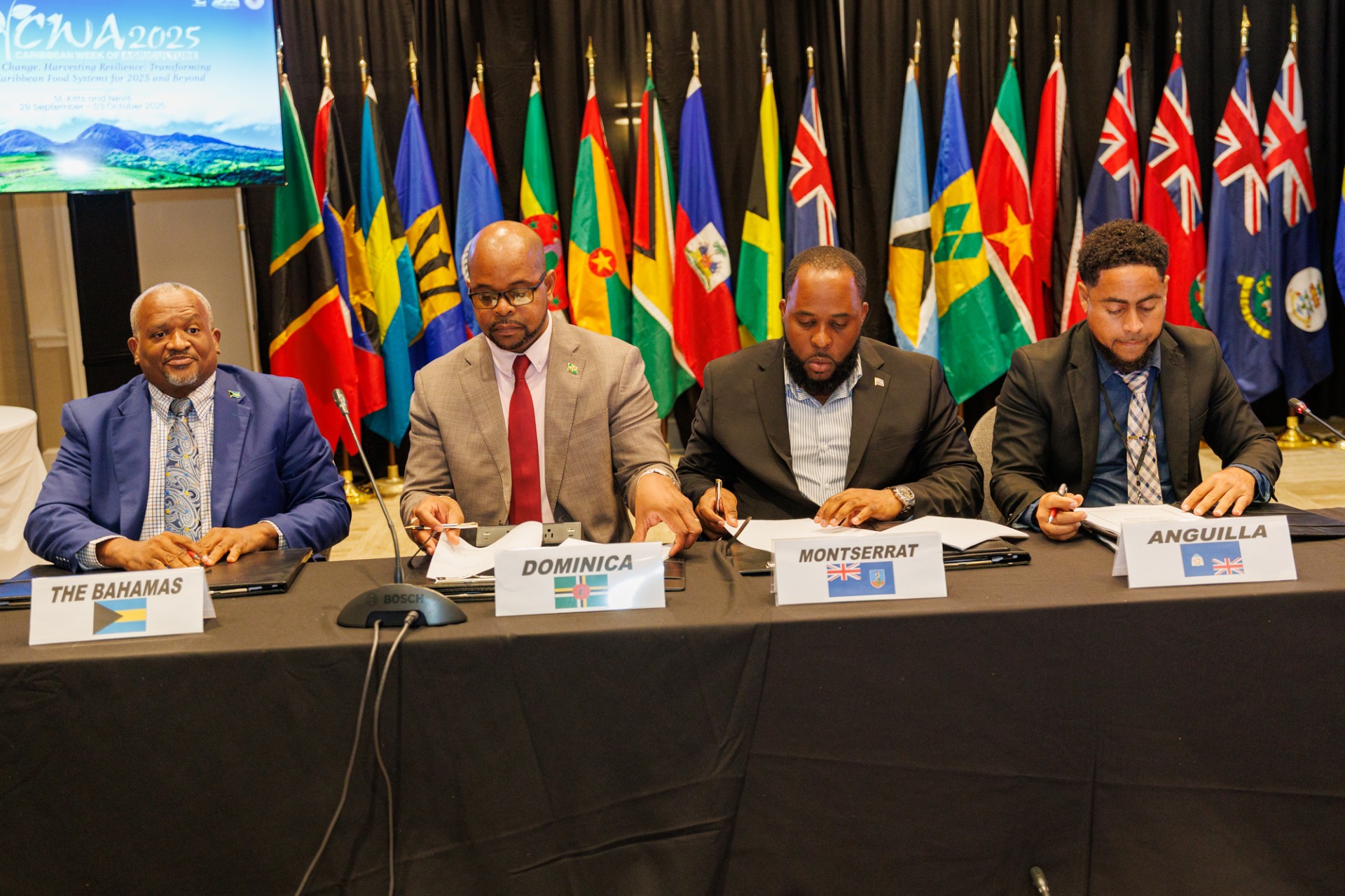
Anguilla, The Bahamas, Dominica, and Montserrat have signed on to the Agreement Establishing the Caribbean Regional Fisheries Mechanism (CRFM), formalising their membership in the 22-year-old institution, inaugurated in Belize City, Belize, in March 2003. The momentous signing was done en bloc at the Sixteenth Special Meeting of the CRFM Ministerial Council, held during the recently concluded Caribbean Week of Agriculture, hosted by St. Kitts and Nevis under the auspices of the Caribbean Community (CARICOM) Secretariat.
Dr. Marc Williams, Executive Director of the CRFM Secretariat, welcomed the decisive move by the four Caribbean countries, which have been actively involved in the CRFM, which is an intergovernmental CARICOM institution.
The heads of delegations who signed the CRFM Agreement on Tuesday, 30 September 2025, on behalf of their respective governments are:
Dr. Williams said: “Currently, there are 17 Member States of the CRFM that have been actively involved in the effective management of the organisation. The CRFM prides itself on meeting the needs of its members with the available resources. When attracting resources to support the implementation of our work program and alleviate the financial burden on Member States, the CRFM is frequently asked about its governance framework.”
He noted that the CRFM has adopted several key policies to improve its governance framework, including:
The CRFM Executive Director added that the CRFM is making a conscious effort to ensure that its initiatives are gender-sensitive and considerate of the needs of youth and Indigenous peoples.
The CRFM’s 17 Member States are Anguilla, Antigua and Barbuda, The Bahamas, Barbados, Belize, Dominica, Grenada, Guyana, Haiti, Jamaica, Montserrat, St. Kitts and Nevis, Saint Lucia, St. Vincent and the Grenadines, Suriname, Trinidad and Tobago, and the Turks and Caicos Islands.
The CRFM’s objectives include the efficient management and sustainable development of marine and other aquatic resources within the jurisdictions of Member States. The CRFM also promotes and establishes cooperative arrangements among interested States for the efficient management of shared, straddling or highly migratory marine and other aquatic resources. Furthermore, it provides technical advisory and consultative services to fisheries authorities of its Member States in the development, management and conservation of their marine and other aquatic resources. (CRFM Press Release)
ABOUT THE CRFM
The Caribbean Regional Fisheries Mechanism (CRFM) was officially inaugurated on 27 March 2003 in Belize City, Belize, where it is headquartered, following the signing of the Agreement Establishing the CRFM on 4 February 2002. It is an inter-governmental organisation whose mission is to promote and facilitate the responsible utilisation of the region’s fisheries and other aquatic resources for the economic and social benefits of the current and future population of the region.
FacebookTwitterLinkedInTumblrPinterestRedditSkypeShare via EmailPrint
Anguilla, The Bahamas, Dominica, and Montserrat have signed on to the Agreement Establishing the Caribbean Regional Fisheries Mechanism (CRFM), formalising their membership in the 22-year-old institution, inaugurated in Belize City, Belize, in March 2003. The momentous signing was done en bloc at the Sixteenth Special Meeting of the CRFM Ministerial Council, held during the recently concluded Caribbean Week of Agriculture, hosted by St. Kitts and Nevis under the auspices of the Caribbean Community (CARICOM) Secretariat.
Dr. Marc Williams, Executive Director of the CRFM Secretariat, welcomed the decisive move by the four Caribbean countries, which have been actively involved in the CRFM, which is an intergovernmental CARICOM institution.
The heads of delegations who signed the CRFM Agreement on Tuesday, 30 September 2025, on behalf of their respective governments are:
Dr. Williams said: “Currently, there are 17 Member States of the CRFM that have been actively involved in the effective management of the organisation. The CRFM prides itself on meeting the needs of its members with the available resources. When attracting resources to support the implementation of our work program and alleviate the financial burden on Member States, the CRFM is frequently asked about its governance framework.”
He noted that the CRFM has adopted several key policies to improve its governance framework, including:
The CRFM Executive Director added that the CRFM is making a conscious effort to ensure that its initiatives are gender-sensitive and considerate of the needs of youth and Indigenous peoples.
The CRFM’s 17 Member States are Anguilla, Antigua and Barbuda, The Bahamas, Barbados, Belize, Dominica, Grenada, Guyana, Haiti, Jamaica, Montserrat, St. Kitts and Nevis, Saint Lucia, St. Vincent and the Grenadines, Suriname, Trinidad and Tobago, and the Turks and Caicos Islands.
The CRFM’s objectives include the efficient management and sustainable development of marine and other aquatic resources within the jurisdictions of Member States. The CRFM also promotes and establishes cooperative arrangements among interested States for the efficient management of shared, straddling or highly migratory marine and other aquatic resources. Furthermore, it provides technical advisory and consultative services to fisheries authorities of its Member States in the development, management and conservation of their marine and other aquatic resources. (CRFM Press Release)
ABOUT THE CRFM
The Caribbean Regional Fisheries Mechanism (CRFM) was officially inaugurated on 27 March 2003 in Belize City, Belize, where it is headquartered, following the signing of the Agreement Establishing the CRFM on 4 February 2002. It is an inter-governmental organisation whose mission is to promote and facilitate the responsible utilisation of the region’s fisheries and other aquatic resources for the economic and social benefits of the current and future population of the region.