/ Jul 15, 2026
Trending
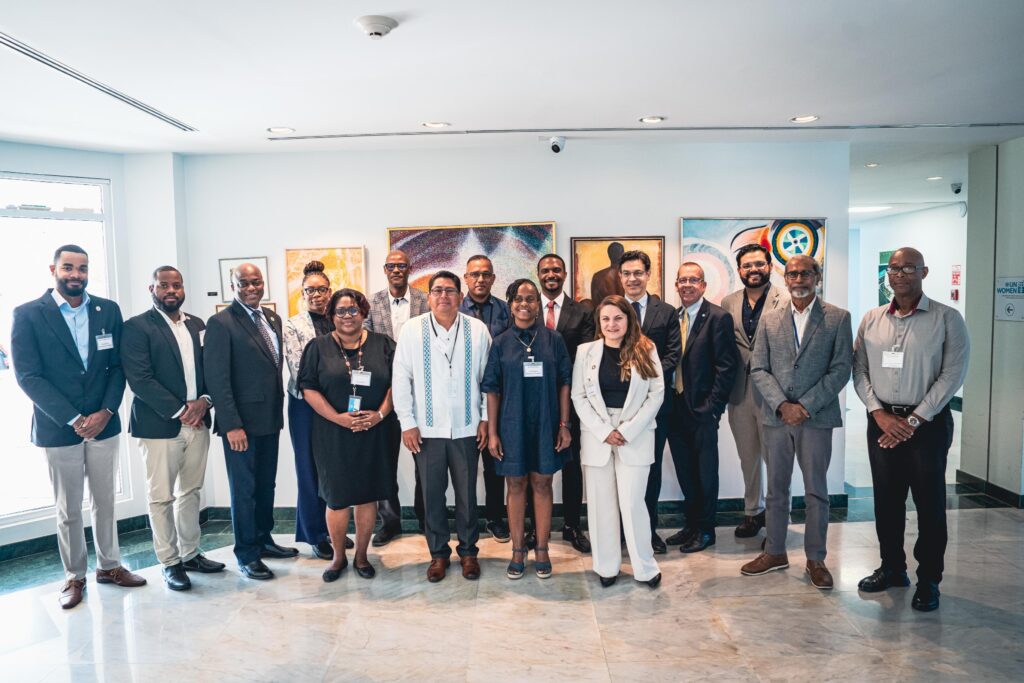
Senior housing officials from seven Caribbean countries conclude the SURGe Caribbean Regional Workshop,
hosted by UN-Habitat in partnership with the United Nations Country Team, and the Slovak Republic.
BRIDGETOWN, 7 May 2026 — Senior housing and urban development officials from seven Caribbean countries have concluded a two-day Regional Workshop at UN House in Barbados with the formal release of the Bridgetown Technical Roadmap, a country-owned working document to guide joint action on urban climate resilience over the next year.
Convened by UN-Habitat’s Regional Office for Latin America and the Caribbean under the Sustainable Urban Resilience for the Next Generation (SURGe) programme, the forum was held in partnership with the Government of Barbados and the UN Sub-Regional Team for Barbados and the Eastern Caribbean. It brought together officials from Barbados, Belize, Dominica, Guyana, Saint Vincent and the Grenadines, Suriname, and Trinidad and Tobago, with United Nations Framework Convention on Climate Change (UNFCCC) Climate Change focal points joining online.
The workshop is expected to deliver three key outputs: the Caribbean Urban Climate Action Collective Baseline, a joint regional self‑assessment of urban climate integration; the Bridgetown Technical Roadmap; and the SURGe Caribbean Background Paper.
In delivering Welcome Remarks, the Honourable Christopher Gibbs , Minister of Housing, Lands and Maintenance of the Government of Barbados, framed the convening as a regional moment of consequence and called for a shift from planning to execution:
“Across the Caribbean, we have made strong climate commitments. Through our Nationally Determined Contributions, our countries have set out ambitious goals to reduce emissions, build resilience, and protect our people and economies from the impacts of climate change. But commitments alone will not protect a roof. Commitments alone will not drain a flooded road,” he maintained.
Drawing on lessons from the recent hurricane season in the region, he also pointed to the need for holistic solutions that address the full infrastructure picture, beyond construction:
“A lot of what we saw in Jamaica was the after-effects of the hurricane, including poor drainage. When we talk about holistic solutions, we must look at the infrastructure as well.”
Minister Gibbs also cited access to housing finance as a major challenge in the region, noting that many individuals struggle to secure adequate funding to purchase homes even when eligible for mortgages. He outlined ongoing work by the Government of Barbados, in coordination with the Ministry of Finance, to design innovative financial solutions to bridge this gap.
A Caribbean that produces solutions
Welcoming delegations to UN House, Mr. Simon Springett, United Nations Resident Coordinator for Barbados and the Eastern Caribbean, warned that global support for climate action is becoming more uncertain, while underlining that the Caribbean continues to lead with solutions:
“The Caribbean is not a place that waits to be saved. The Caribbean is a place that produces solutions. It exports ideas, and it speaks time and time again with the clarity and moral force that punches profoundly above its weight in global conversations.”
Mr. Elkin Velasquez Monsalve, Regional Director of UN-Habitat for Latin America and the Caribbean, further underlined that urban climate action across the Caribbean sub-region would be country-led and anchored, in alignment with workshop outcomes.
“In the Caribbean, adequate housing sits at the centre of urban climate action. This Workshop, and the work that follows, reflects exactly that conviction: country-led, anchored in multilevel governance, and grounded in the realities of each country.”
Housing at the centre of the climate response
Mr. Luis Antonio Ramírez García, SURGe Coordinator for Latin America and the Caribbean at UN-Habitat ROLAC, outlined what the Roadmap means in practice and why housing is the most consequential entry point for the climate response:
“When we speak about climate change, we speak about many things: hurricanes, floods, rising seas. But what is most consistently affected, and most painfully lost, is housing. We lose our homes, our history, the very places that hold who we are, and we are left vulnerable. That is what we are here to change. The Bridgetown Technical Roadmap commits each of us, the participating countries and UN-Habitat alike, to a clear set of priorities, requests and follow-up moments over the next twelve months. Our work begins now.”
A collective regional baseline
On the opening day of the Workshop, delegations produced the Caribbean Urban Climate Action Collective Baseline—a first‑of‑its‑kind regional self‑assessment. It highlights each country’s progress in integrating climate into housing and urban planning, identifies barriers to climate‑resilient urban development, and sets priority areas for UN‑Habitat technical support over the next twelve months.
This milestone delivers the first regional snapshot of urban climate integration and provides the analytical foundation for SURGe Caribbean’s continued engagement. The Workshop also fostered peer exchange, with partners sharing experiences on managing dense communities and improving living conditions.
The work initiated in Bridgetown will inform UN‑Habitat’s contributions to the World Urban Forum (WUF13) in Baku and COP31. It marks the start of a structured technical partnership between UN‑Habitat ROLAC and the Caribbean—anchored in country priorities, mutual accountability, and a one‑year horizon of joint action.
The United Nations Country Team in Barbados and the Eastern Caribbean, led by the Resident Coordinator, will accompany implementation of the commitments. Bringing together UN agencies, funds, and programmes under the multi‑country office, the Team will continue to support national development priorities in close coordination with Member States.
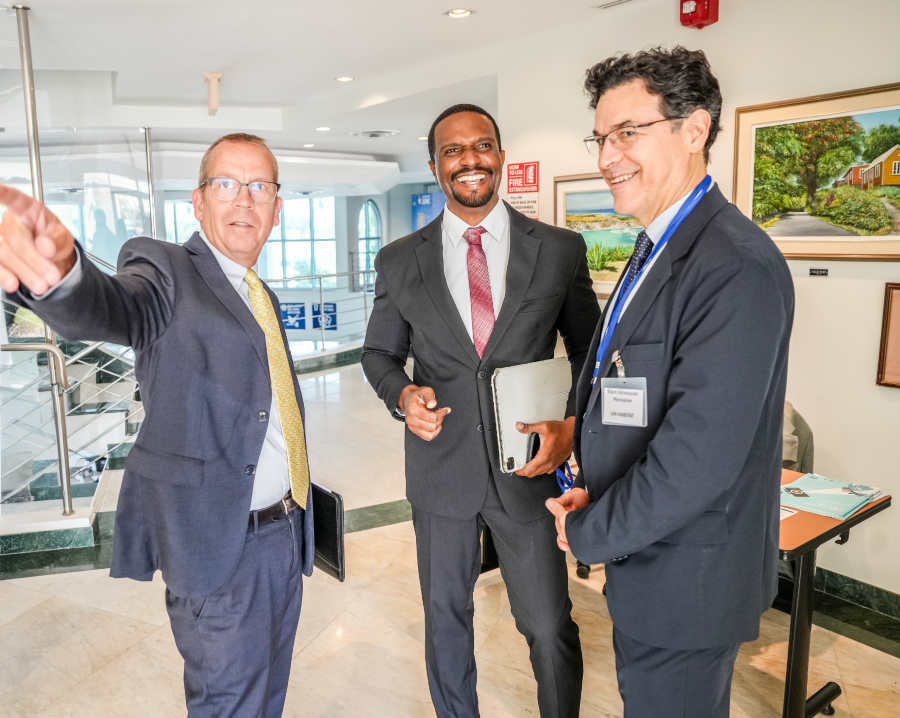
Senior housing officials from seven Caribbean countries conclude the SURGe Caribbean Regional Workshop,
hosted by UN-Habitat in partnership with the United Nations Country Team, and the Slovak Republic.
BRIDGETOWN, 7 May 2026 — Senior housing and urban development officials from seven Caribbean countries have concluded a two-day Regional Workshop at UN House in Barbados with the formal release of the Bridgetown Technical Roadmap, a country-owned working document to guide joint action on urban climate resilience over the next year.
Convened by UN-Habitat’s Regional Office for Latin America and the Caribbean under the Sustainable Urban Resilience for the Next Generation (SURGe) programme, the forum was held in partnership with the Government of Barbados and the UN Sub-Regional Team for Barbados and the Eastern Caribbean. It brought together officials from Barbados, Belize, Dominica, Guyana, Saint Vincent and the Grenadines, Suriname, and Trinidad and Tobago, with United Nations Framework Convention on Climate Change (UNFCCC) Climate Change focal points joining online.
The workshop is expected to deliver three key outputs: the Caribbean Urban Climate Action Collective Baseline, a joint regional self‑assessment of urban climate integration; the Bridgetown Technical Roadmap; and the SURGe Caribbean Background Paper.
In delivering Welcome Remarks, the Honourable Christopher Gibbs , Minister of Housing, Lands and Maintenance of the Government of Barbados, framed the convening as a regional moment of consequence and called for a shift from planning to execution:
“Across the Caribbean, we have made strong climate commitments. Through our Nationally Determined Contributions, our countries have set out ambitious goals to reduce emissions, build resilience, and protect our people and economies from the impacts of climate change. But commitments alone will not protect a roof. Commitments alone will not drain a flooded road,” he maintained.
Drawing on lessons from the recent hurricane season in the region, he also pointed to the need for holistic solutions that address the full infrastructure picture, beyond construction:
“A lot of what we saw in Jamaica was the after-effects of the hurricane, including poor drainage. When we talk about holistic solutions, we must look at the infrastructure as well.”
Minister Gibbs also cited access to housing finance as a major challenge in the region, noting that many individuals struggle to secure adequate funding to purchase homes even when eligible for mortgages. He outlined ongoing work by the Government of Barbados, in coordination with the Ministry of Finance, to design innovative financial solutions to bridge this gap.
A Caribbean that produces solutions
Welcoming delegations to UN House, Mr. Simon Springett, United Nations Resident Coordinator for Barbados and the Eastern Caribbean, warned that global support for climate action is becoming more uncertain, while underlining that the Caribbean continues to lead with solutions:
“The Caribbean is not a place that waits to be saved. The Caribbean is a place that produces solutions. It exports ideas, and it speaks time and time again with the clarity and moral force that punches profoundly above its weight in global conversations.”
Mr. Elkin Velasquez Monsalve, Regional Director of UN-Habitat for Latin America and the Caribbean, further underlined that urban climate action across the Caribbean sub-region would be country-led and anchored, in alignment with workshop outcomes.
“In the Caribbean, adequate housing sits at the centre of urban climate action. This Workshop, and the work that follows, reflects exactly that conviction: country-led, anchored in multilevel governance, and grounded in the realities of each country.”
Housing at the centre of the climate response
Mr. Luis Antonio Ramírez García, SURGe Coordinator for Latin America and the Caribbean at UN-Habitat ROLAC, outlined what the Roadmap means in practice and why housing is the most consequential entry point for the climate response:
“When we speak about climate change, we speak about many things: hurricanes, floods, rising seas. But what is most consistently affected, and most painfully lost, is housing. We lose our homes, our history, the very places that hold who we are, and we are left vulnerable. That is what we are here to change. The Bridgetown Technical Roadmap commits each of us, the participating countries and UN-Habitat alike, to a clear set of priorities, requests and follow-up moments over the next twelve months. Our work begins now.”
A collective regional baseline
On the opening day of the Workshop, delegations produced the Caribbean Urban Climate Action Collective Baseline—a first‑of‑its‑kind regional self‑assessment. It highlights each country’s progress in integrating climate into housing and urban planning, identifies barriers to climate‑resilient urban development, and sets priority areas for UN‑Habitat technical support over the next twelve months.
This milestone delivers the first regional snapshot of urban climate integration and provides the analytical foundation for SURGe Caribbean’s continued engagement. The Workshop also fostered peer exchange, with partners sharing experiences on managing dense communities and improving living conditions.
The work initiated in Bridgetown will inform UN‑Habitat’s contributions to the World Urban Forum (WUF13) in Baku and COP31. It marks the start of a structured technical partnership between UN‑Habitat ROLAC and the Caribbean—anchored in country priorities, mutual accountability, and a one‑year horizon of joint action.
The United Nations Country Team in Barbados and the Eastern Caribbean, led by the Resident Coordinator, will accompany implementation of the commitments. Bringing together UN agencies, funds, and programmes under the multi‑country office, the Team will continue to support national development priorities in close coordination with Member States.