/ Aug 31, 2026
Trending
Opinion Editorial by Kevon Campbell, Logistics Specialist (CDEMA) and Jan Willem Wegdam, Shelter Advisor(IOM)
The Caribbean is no stranger to generosity. But without coordination, even the best intentions can become a secondary disaster, slowing down response efforts when every minute matters.
After major disasters, unsolicited and uncoordinated donations often overwhelm ports and warehouses: winter coats in tropical climates, expired food, mixed boxes nobody can sort, and tarpaulins too thin to withstand rain, all of which creates waste and diverts attention from urgent needs, instead of helping people in crisis.
Experience from the Caribbean Disaster Management Agency (CDEMA) and its Participating States shows that, without clear donation management policies, large volumes of inappropriate or unusable goods consume valuable time, personnel, and funding, placing significant strain on national logistics systems and delaying the delivery of essential items like food, water, shelter materials, and medical supplies. Moreover, up to 60 per cent of these unsolicited goods often go unused, ending up as waste, adding to environmental harm.
These challenges are not just operational but human: when response systems slow, vulnerable populations wait longer for life-saving relief.
Picture 1 and 2:
Warehouses with miscellaneous, often unrequested
relief items. Credit: CDEMA/Goddard
Why This Matters Now
Between 2020 and 2025, more than 2.6 million people across 13 English and Dutch-speaking Caribbean countries were affected by floods, storms and volcanic activity. These disasters caused widespread destruction, disrupted communities, and placed sustained pressure on social
systems and national economies, highlighting the region’s increasing exposure to complex and overlapping hazards.
As the 2026 Atlantic hurricane season approaches, alongside the growing intensity of tropical storms, the need for preparedness is more urgent than ever. Experience from recent disasters has shown that preparedness must extend beyond physical infrastructure and response capacity to include strong public systems capable of managing and effectively channelling incoming support—so that generosity strengthens response efforts rather than overwhelming them.
Donating Responsibly
To raise public awareness about these issues, CDEMA and the International Organization for Migration (IOM), in collaboration with regional and international partners, are advancing a regional Donate Responsibly Campaign, aimed at transforming how assistance is provided to disaster-affected countries.
This initiative, funded by EU Humanitarian Aid, is based on a simple but powerful principle: donations must be needs-based, coordinated, and aligned with national systems.
CDEMA has already laid critical groundwork through its Comprehensive Relief and Logistics Management Programme, supporting Participating States to strengthen how aid is managed. This includes developing national logistics plans, setting policies for donations and unsolicited goods, identifying priority need, improving supply chains, and strengthening coordination through National Emergency Operations Centres. Tools such as logistics tracking systems are already helping ensure that assistance is driven by real-time needs, not assumptions.
Through the International Disaster Response Law (IDRL) with The International Federation of Red Cross and Red Crescent Societies, CDEMA is supporting countries to strengthen frameworks that both facilitate and regulate incoming aid—ensuring it is coordinated, accountable, and aligned with real on-the-ground needs. This includes regulating incoming assistance, streamline customs and clearance processes, and upholding quality and accountability standards. Complementing this, regional coordination mechanisms co-led by IOM, CDEMA, and IFRC, such as the Emergency Shelter and Non-Food Items Technical Working Group and Relief and Logistics Thematic Working Group, are helping align partners around common standards and priorities.
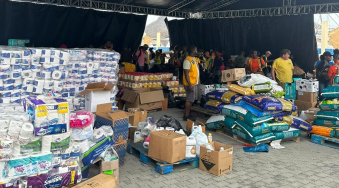
Picture 3: Temporary warehouse to sort and stage relief supplies following Hurricane Beryl, enabling distribution by local and international response teams. Credit: IOM/Bate 2024
Before You Donate: What Matters Most
First: Cash is best. Financial contributions allow responders and governments to procure and donate exactly what is needed, when and where it is needed, while supporting local economies.
Second: Coordination is essential. Before donating, follow guidance from national disaster offices and CDEMA, and work through recognized partners, priority needs lists, and quality standards.
Third: Supporting regional and national systems is equally important. All assistance must align with national and regional response systems and logistics plans—never bypass them.
.
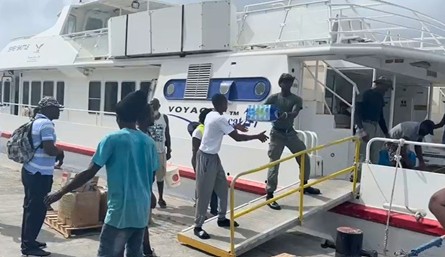
Picture 4: Local response teams offloading relief items for onward distribution. Credit: IOM/Bate 2024
Responsible donating must support recovery, not create new burdens. Donations should address needs and avoid creating waste and environmental harm or additional financial strain on small island states already on the climate frontline.
Context matters. The Caribbean is diverse, and donations must be culturally appropriate, climate-relevant, and fit for purpose. What helps in one setting may be ineffective, or even harmful, in another.
How we give is just as important as what we give, before you give, ask yourself: is this donation needed and is it coordinated?
Encouragingly, young people across the region are pushing for smarter, greener approaches to disaster response and their message is clear: responsible giving is informed, coordinated, and sustainable
To our diaspora and private sector partners, governments, and global supporters: your generosity can save lives—but only if it meets real needs. Support trusted organizations. Follow official channels. Give cash where possible. Make your impact count.
Donate responsibly. Support smarter response. Build stronger resilience.
Opinion Editorial by Kevon Campbell, Logistics Specialist (CDEMA) and Jan Willem Wegdam, Shelter Advisor(IOM)
The Caribbean is no stranger to generosity. But without coordination, even the best intentions can become a secondary disaster, slowing down response efforts when every minute matters.
After major disasters, unsolicited and uncoordinated donations often overwhelm ports and warehouses: winter coats in tropical climates, expired food, mixed boxes nobody can sort, and tarpaulins too thin to withstand rain, all of which creates waste and diverts attention from urgent needs, instead of helping people in crisis.
Experience from the Caribbean Disaster Management Agency (CDEMA) and its Participating States shows that, without clear donation management policies, large volumes of inappropriate or unusable goods consume valuable time, personnel, and funding, placing significant strain on national logistics systems and delaying the delivery of essential items like food, water, shelter materials, and medical supplies. Moreover, up to 60 per cent of these unsolicited goods often go unused, ending up as waste, adding to environmental harm.
These challenges are not just operational but human: when response systems slow, vulnerable populations wait longer for life-saving relief.
Picture 1 and 2:
Warehouses with miscellaneous, often unrequested
relief items. Credit: CDEMA/Goddard
Why This Matters Now
Between 2020 and 2025, more than 2.6 million people across 13 English and Dutch-speaking Caribbean countries were affected by floods, storms and volcanic activity. These disasters caused widespread destruction, disrupted communities, and placed sustained pressure on social
systems and national economies, highlighting the region’s increasing exposure to complex and overlapping hazards.
As the 2026 Atlantic hurricane season approaches, alongside the growing intensity of tropical storms, the need for preparedness is more urgent than ever. Experience from recent disasters has shown that preparedness must extend beyond physical infrastructure and response capacity to include strong public systems capable of managing and effectively channelling incoming support—so that generosity strengthens response efforts rather than overwhelming them.
Donating Responsibly
To raise public awareness about these issues, CDEMA and the International Organization for Migration (IOM), in collaboration with regional and international partners, are advancing a regional Donate Responsibly Campaign, aimed at transforming how assistance is provided to disaster-affected countries.
This initiative, funded by EU Humanitarian Aid, is based on a simple but powerful principle: donations must be needs-based, coordinated, and aligned with national systems.
CDEMA has already laid critical groundwork through its Comprehensive Relief and Logistics Management Programme, supporting Participating States to strengthen how aid is managed. This includes developing national logistics plans, setting policies for donations and unsolicited goods, identifying priority need, improving supply chains, and strengthening coordination through National Emergency Operations Centres. Tools such as logistics tracking systems are already helping ensure that assistance is driven by real-time needs, not assumptions.
Through the International Disaster Response Law (IDRL) with The International Federation of Red Cross and Red Crescent Societies, CDEMA is supporting countries to strengthen frameworks that both facilitate and regulate incoming aid—ensuring it is coordinated, accountable, and aligned with real on-the-ground needs. This includes regulating incoming assistance, streamline customs and clearance processes, and upholding quality and accountability standards. Complementing this, regional coordination mechanisms co-led by IOM, CDEMA, and IFRC, such as the Emergency Shelter and Non-Food Items Technical Working Group and Relief and Logistics Thematic Working Group, are helping align partners around common standards and priorities.
Picture 3: Temporary warehouse to sort and stage relief supplies following Hurricane Beryl, enabling distribution by local and international response teams. Credit: IOM/Bate 2024
Before You Donate: What Matters Most
First: Cash is best. Financial contributions allow responders and governments to procure and donate exactly what is needed, when and where it is needed, while supporting local economies.
Second: Coordination is essential. Before donating, follow guidance from national disaster offices and CDEMA, and work through recognized partners, priority needs lists, and quality standards.
Third: Supporting regional and national systems is equally important. All assistance must align with national and regional response systems and logistics plans—never bypass them.
.
Picture 4: Local response teams offloading relief items for onward distribution. Credit: IOM/Bate 2024
Responsible donating must support recovery, not create new burdens. Donations should address needs and avoid creating waste and environmental harm or additional financial strain on small island states already on the climate frontline.
Context matters. The Caribbean is diverse, and donations must be culturally appropriate, climate-relevant, and fit for purpose. What helps in one setting may be ineffective, or even harmful, in another.
How we give is just as important as what we give, before you give, ask yourself: is this donation needed and is it coordinated?
Encouragingly, young people across the region are pushing for smarter, greener approaches to disaster response and their message is clear: responsible giving is informed, coordinated, and sustainable
To our diaspora and private sector partners, governments, and global supporters: your generosity can save lives—but only if it meets real needs. Support trusted organizations. Follow official channels. Give cash where possible. Make your impact count.
Donate responsibly. Support smarter response. Build stronger resilience.