/ May 28, 2026
Trending

News Elementor

RECENT NEWS

Transforming agrifood systems: from global vision to regional action

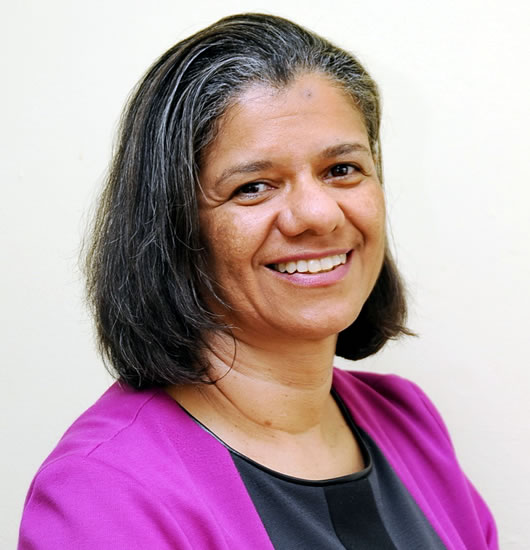
QU Dongyu, Director-General of the Food and Agriculture Organization of the United Nations

The agrifood systems of Latin America and the Caribbean produce enough food to feed more than its own population of 664 million. This contribution to world food security and nutrition is the result of the rich biodiversity of its land and marine ecosystems, and the resourcefulness of its 18 million farmers and fisherfolk.

However, the region’s agrifood systems are under great pressure. The impacts of the climate crisis have led to daunting challenges such as erratic and ever more extreme weather patterns, reduced rainfall and long spells of drought, intense hurricanes, melting glaciers and higher temperatures, to name a few.

Our own actions have caused great damage to the region’s biodiversity, and the resulting ecological imbalances have a negative impact on food producers and the society as a whole.

Diets have also changed, and this had led to a spike in overweight and obesity that is already the leading cause of premature deaths in the region, while 60 million people go hungry and a quarter of the regional population is moderately or severely food insecure, and tens of millions of rural dwellers have been left behind and live in conditions of poverty and marginalization.

Access to science, modern technologies and digitalization are uneven, with some farmers and agrifood companies at the forefront of global innovation, and many others excluded from taking advantage of these basic tools, while local and ancestral knowledge is unrecognized.

All of these conditions constrain the future development of Latin America and the Caribbean’s agrifood systems. Addressing these challenges is necessary for the region to continue playing its key role in the global community. For this reason, the countries of the region unanimously endorsed the Strategic Framework 2022-31 of the Food and Agriculture Organization of the United Nations (FAO). The central mandate of the framework is to support its Members in the transformation to MORE efficient, inclusive, resilient and sustainable agri-food systems.

From 28 March to 1 April, all 33 countries in the region will participate in the 37th Session of FAO’s Regional Conference, in Quito, Ecuador, to reach consensus, make recommendations and take the necessary actions to incentivize, support and transform their agrifood systems.

In the decades to come, technological, institutional, and social innovation must be at the core of our actions to ensure that the region’s agrifood systems continue playing a leading role in global agriculture, trade and food security.

Innovation is needed at the local and national levels, but also at the regional level, because many of the challenges we face require coordinated action; we need to work together in an efficient, effective and coherent manner in order to achieve impactful outcomes on the ground.

FAO has the professional and technical capacity to provide the support needed for this collective action. By mobilizing knowledge and good practices from every corner of the region, and globally, and by brokering partnerships and fostering synergies and collaboration the Organization can make innovation readily available to all, to multiply impact. 

FAO is already doing so through global flagship initiatives such as: the Hand-in-Hand Initiative, which is accelerating rural investment and development; the 1000 Digital Villages program, which is helping villages take a giant leap forward in terms of digitalization; the Technical Platform for Family Farming, which supports region-to-region cross fertilization for policy innovation; and the One Country One Priority Product initiative, which accelerates the development of new agricultural products.

In Latin America and the Caribbean, FAO is implementing over 400 national, sub-regional, and regional projects, reaching millions of households that participate along the entire  agrifood value chain, from till to table.

Working with hundreds of partners in government, civil society, the private sector, and the scientific and academic communities, FAO has increased financial resources to enable this work by almost 80 percent. Moreover, the Organization has undergone a deep reform not just globally, but also regionally, to become more transparent, responsive, agile, effective, digital and innovative.

We are ready to do more and, above all, to do better, thinking big and acting concrete. We await the deliberations and recommendations emanating from the upcoming Regional Conference that will chart the path to turn the vision of agrifood transformation into actions deeply rooted in the concrete conditions, priorities and needs of Latin America and the Caribbean.

By doing so, the region will rise and face its many challenges, with tangible results leading to better production, better nutrition, a better environment, and a better life for all, leaving no one behind.

QU Dongyu, Director-General of the Food and Agriculture Organization of the United Nations

The agrifood systems of Latin America and the Caribbean produce enough food to feed more than its own population of 664 million. This contribution to world food security and nutrition is the result of the rich biodiversity of its land and marine ecosystems, and the resourcefulness of its 18 million farmers and fisherfolk.

However, the region’s agrifood systems are under great pressure. The impacts of the climate crisis have led to daunting challenges such as erratic and ever more extreme weather patterns, reduced rainfall and long spells of drought, intense hurricanes, melting glaciers and higher temperatures, to name a few.

Our own actions have caused great damage to the region’s biodiversity, and the resulting ecological imbalances have a negative impact on food producers and the society as a whole.

Diets have also changed, and this had led to a spike in overweight and obesity that is already the leading cause of premature deaths in the region, while 60 million people go hungry and a quarter of the regional population is moderately or severely food insecure, and tens of millions of rural dwellers have been left behind and live in conditions of poverty and marginalization.

Access to science, modern technologies and digitalization are uneven, with some farmers and agrifood companies at the forefront of global innovation, and many others excluded from taking advantage of these basic tools, while local and ancestral knowledge is unrecognized.

All of these conditions constrain the future development of Latin America and the Caribbean’s agrifood systems. Addressing these challenges is necessary for the region to continue playing its key role in the global community. For this reason, the countries of the region unanimously endorsed the Strategic Framework 2022-31 of the Food and Agriculture Organization of the United Nations (FAO). The central mandate of the framework is to support its Members in the transformation to MORE efficient, inclusive, resilient and sustainable agri-food systems.

From 28 March to 1 April, all 33 countries in the region will participate in the 37th Session of FAO’s Regional Conference, in Quito, Ecuador, to reach consensus, make recommendations and take the necessary actions to incentivize, support and transform their agrifood systems.

In the decades to come, technological, institutional, and social innovation must be at the core of our actions to ensure that the region’s agrifood systems continue playing a leading role in global agriculture, trade and food security.

Innovation is needed at the local and national levels, but also at the regional level, because many of the challenges we face require coordinated action; we need to work together in an efficient, effective and coherent manner in order to achieve impactful outcomes on the ground.

FAO has the professional and technical capacity to provide the support needed for this collective action. By mobilizing knowledge and good practices from every corner of the region, and globally, and by brokering partnerships and fostering synergies and collaboration the Organization can make innovation readily available to all, to multiply impact. 

FAO is already doing so through global flagship initiatives such as: the Hand-in-Hand Initiative, which is accelerating rural investment and development; the 1000 Digital Villages program, which is helping villages take a giant leap forward in terms of digitalization; the Technical Platform for Family Farming, which supports region-to-region cross fertilization for policy innovation; and the One Country One Priority Product initiative, which accelerates the development of new agricultural products.

In Latin America and the Caribbean, FAO is implementing over 400 national, sub-regional, and regional projects, reaching millions of households that participate along the entire  agrifood value chain, from till to table.

Working with hundreds of partners in government, civil society, the private sector, and the scientific and academic communities, FAO has increased financial resources to enable this work by almost 80 percent. Moreover, the Organization has undergone a deep reform not just globally, but also regionally, to become more transparent, responsive, agile, effective, digital and innovative.

We are ready to do more and, above all, to do better, thinking big and acting concrete. We await the deliberations and recommendations emanating from the upcoming Regional Conference that will chart the path to turn the vision of agrifood transformation into actions deeply rooted in the concrete conditions, priorities and needs of Latin America and the Caribbean.

By doing so, the region will rise and face its many challenges, with tangible results leading to better production, better nutrition, a better environment, and a better life for all, leaving no one behind.

It is a long established fact that a reader will be distracted by the readable content of a page when looking at its layout. The point of using Lorem Ipsum is that it has a more-or-less normal distribution of letters, as opposed to using ‘Content here, content here’, making it look like readable English. Many desktop publishing packages and web page editors now use Lorem Ipsum as their default model text, and a search for ‘lorem ipsum’ will uncover many web sites still in their infancy.

It is a long established fact that a reader will be distracted by the readable content of a page when looking at its layout. The point of using Lorem Ipsum is that it has a more-or-less normal distribution of letters, as opposed to using ‘Content here, content here’, making it look like readable English. Many desktop publishing packages and web page editors now use Lorem Ipsum as their default model text, and a search for ‘lorem ipsum’ will uncover many web sites still in their infancy.

The point of using Lorem Ipsum is that it has a more-or-less normal distribution of letters, as opposed to using ‘Content here, content here’, making

The point of using Lorem Ipsum is that it has a more-or-less normal distribution of letters, as opposed to using ‘Content here, content here’, making it look like readable English. Many desktop publishing packages and web page editors now use Lorem Ipsum as their default model text, and a search for ‘lorem ipsum’ will uncover many web sites still in their infancy.

EmoNews Contributor

RECENT POSTS

CATEGORIES

Leave a Reply

Your email address will not be published. Required fields are marked *

SUBSCRIBE US

We’re excited to introduce Emonew, Dominica’s fresh new source for general country news. From community updates to national stories, we’re here to keep you informed, connected, and up to date.

Copyright Emonews 2025