/ Sep 23, 2026
Trending
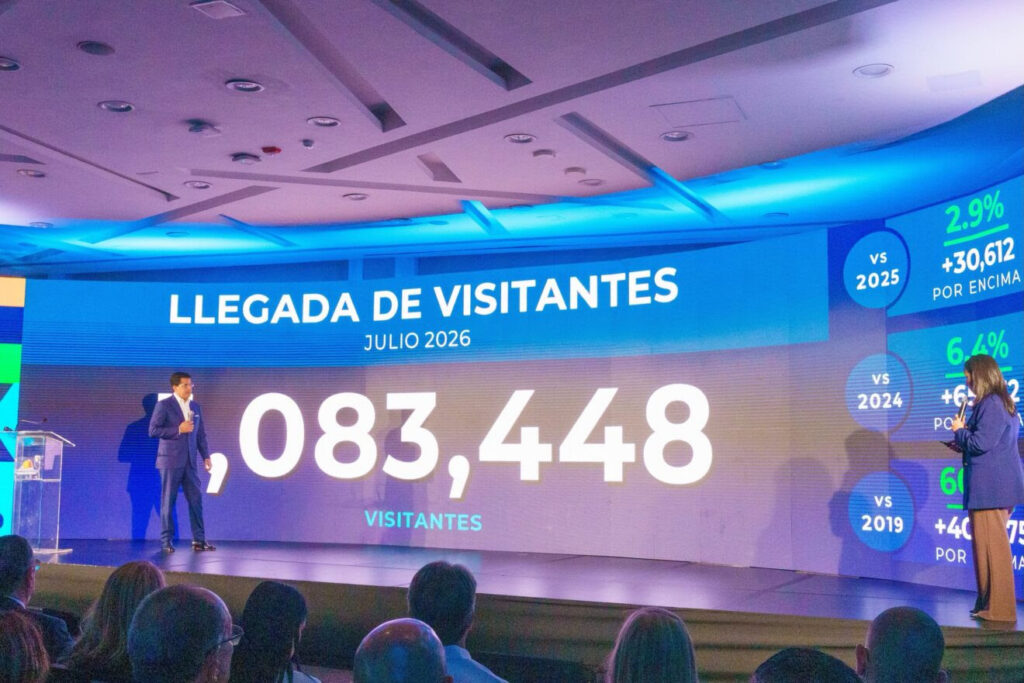
Standing in front of a screen displaying 1,083,448 visitors, Minister David Collado presented the results for July 2026. Behind this record-breaking tourism figure in the Dominican Republic, authorities want to highlight concrete impacts on employment, suppliers, and government revenue. But the figures also reveal a concentration of arrivals in just a few regions.
A New Milestone Reached in July
The Dominican Republic welcomed 921,718 tourists arriving by air and 161,730 cruise ship passengers in July, for a total of 1,083,448 visitors. This figure represents a 2.9% increase compared to July 2025, a 6.4% increase compared to 2024, and a 60.6% increase compared to 2019.
In the first seven months of 2026, the country welcomed a total of 7,700,118 visitors: 5,885,259 arrived by air and 1,814,859 by sea. The cumulative total is 7% higher than in 2025 and 10.4% higher than in 2024. Tourism in the Dominican Republic thus confirms a growth trend that is not based on a single exceptional month.
Punta Cana accounts for 58% of air arrivals
This is a national record, but the distribution remains uneven. In July, Punta Cana Airport handled 537,204 passengers, accounting for 58% of all air arrivals. Las Américas received 219,494 passengers, or 24%, while Cibao handled 119,662, or 13%. Puerto Plata accounted for 3%, compared with 1% each for La Romana and Samaná.
This breakdown highlights Punta Cana’s significance to tourism in the Dominican Republic. However, other destinations are also experiencing strong activity. Nationwide hotel occupancy reached 76%, with 92% in Bayahíbe, 83% in La Romana, 82% in Miches, and 80% in the Bávaro–Punta Cana area.
183,000 jobs generated by occupied rooms
Authorities estimate that hotels support more than 183,000 direct jobs and that approximately 605,000 people depend economically on the tourism industry. The kitchen is the largest source of hotel jobs, with 42,460 positions. Restaurants account for 28,991, and bars for 14,443.
In addition to these occupations are services, maintenance, security, tours, transportation, and retail. Yanira Eusebio, a beverage vendor on Guayacanes Beach, explained that the renovation of her sales stand and customer service training had helped her increase her income. Her story serves as a reminder that tourism in the Dominican Republic is not limited to hotel resorts.
Salaries, Suppliers, and Taxes
In July, the total payroll for hotels reached 4.77 billion Dominican pesos. Purchases from suppliers totaled 11.59 billion, or more than 374 million pesos per day. The sector also paid 8.729 billion pesos in taxes, according to data presented by the ministry.
The supply chain amplifies these benefits. According to Deputy Minister Jacqueline Mora, 92% of the farmland that supplies hotel kitchens is located outside the Eastern Region. Consequently, a portion of the spending generated by tourism in the Dominican Republic benefits producers located far from the popular beaches.
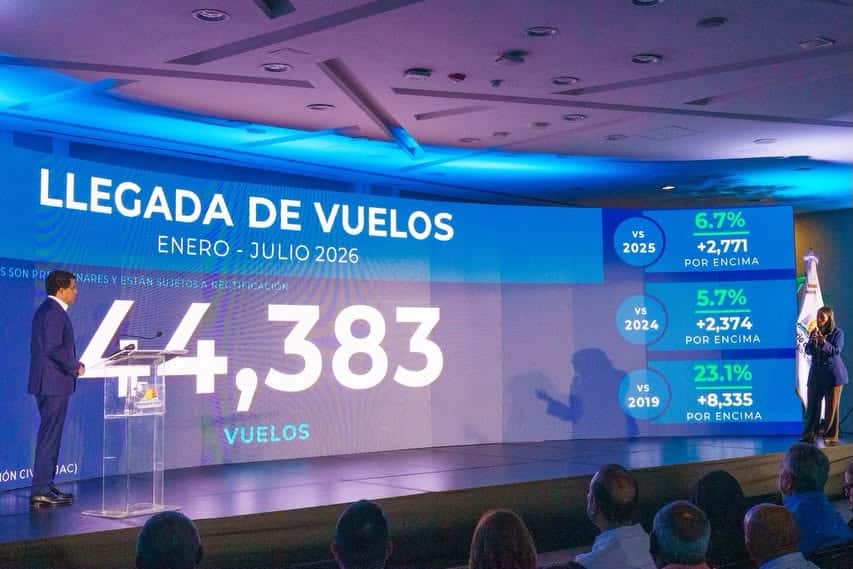


Standing in front of a screen displaying 1,083,448 visitors, Minister David Collado presented the results for July 2026. Behind this record-breaking tourism figure in the Dominican Republic, authorities want to highlight concrete impacts on employment, suppliers, and government revenue. But the figures also reveal a concentration of arrivals in just a few regions.
A New Milestone Reached in July
The Dominican Republic welcomed 921,718 tourists arriving by air and 161,730 cruise ship passengers in July, for a total of 1,083,448 visitors. This figure represents a 2.9% increase compared to July 2025, a 6.4% increase compared to 2024, and a 60.6% increase compared to 2019.
In the first seven months of 2026, the country welcomed a total of 7,700,118 visitors: 5,885,259 arrived by air and 1,814,859 by sea. The cumulative total is 7% higher than in 2025 and 10.4% higher than in 2024. Tourism in the Dominican Republic thus confirms a growth trend that is not based on a single exceptional month.
Punta Cana accounts for 58% of air arrivals
This is a national record, but the distribution remains uneven. In July, Punta Cana Airport handled 537,204 passengers, accounting for 58% of all air arrivals. Las Américas received 219,494 passengers, or 24%, while Cibao handled 119,662, or 13%. Puerto Plata accounted for 3%, compared with 1% each for La Romana and Samaná.
This breakdown highlights Punta Cana’s significance to tourism in the Dominican Republic. However, other destinations are also experiencing strong activity. Nationwide hotel occupancy reached 76%, with 92% in Bayahíbe, 83% in La Romana, 82% in Miches, and 80% in the Bávaro–Punta Cana area.
183,000 jobs generated by occupied rooms
Authorities estimate that hotels support more than 183,000 direct jobs and that approximately 605,000 people depend economically on the tourism industry. The kitchen is the largest source of hotel jobs, with 42,460 positions. Restaurants account for 28,991, and bars for 14,443.
In addition to these occupations are services, maintenance, security, tours, transportation, and retail. Yanira Eusebio, a beverage vendor on Guayacanes Beach, explained that the renovation of her sales stand and customer service training had helped her increase her income. Her story serves as a reminder that tourism in the Dominican Republic is not limited to hotel resorts.
Salaries, Suppliers, and Taxes
In July, the total payroll for hotels reached 4.77 billion Dominican pesos. Purchases from suppliers totaled 11.59 billion, or more than 374 million pesos per day. The sector also paid 8.729 billion pesos in taxes, according to data presented by the ministry.
The supply chain amplifies these benefits. According to Deputy Minister Jacqueline Mora, 92% of the farmland that supplies hotel kitchens is located outside the Eastern Region. Consequently, a portion of the spending generated by tourism in the Dominican Republic benefits producers located far from the popular beaches.