/ Sep 16, 2026
Trending
This week, six more Caribbean professionals graduated from the year-long University of the West Indies (UWI) Climate Change and Health Leaders Fellowship Training Program. They are Dr Ayanna Alexander and Jenise Tyson from Trinidad and Tobago, Linnees Green-Baker and Dr Nicole Dawkins-Wright of Jamaica, Lucy Cumberbatch from Guyana, and Najay Parke of Grenada. Their graduation took place earlier this week, during a summative workshop held in Kingston, Jamaica.
The goal of the program, which is funded by the European Union (EU), is to develop strong, effective Climate Change leadership among government officials, civil society, communities, and the private sector, championing and implementing the One Health Approach which recognises the shared challenges across the region and the intricate interconnections between the health of people, animals, plants, and their shared environment.
While speaking to the graduates, Aniceto Rodriguez Ruiz, Head of Cooperation of the European Union in Jamaica, described the fellows as “testament to the vision of the fellowship programme to strengthen climate leadership in the Caribbean region through a multidisciplinary approach to this common challenge”.
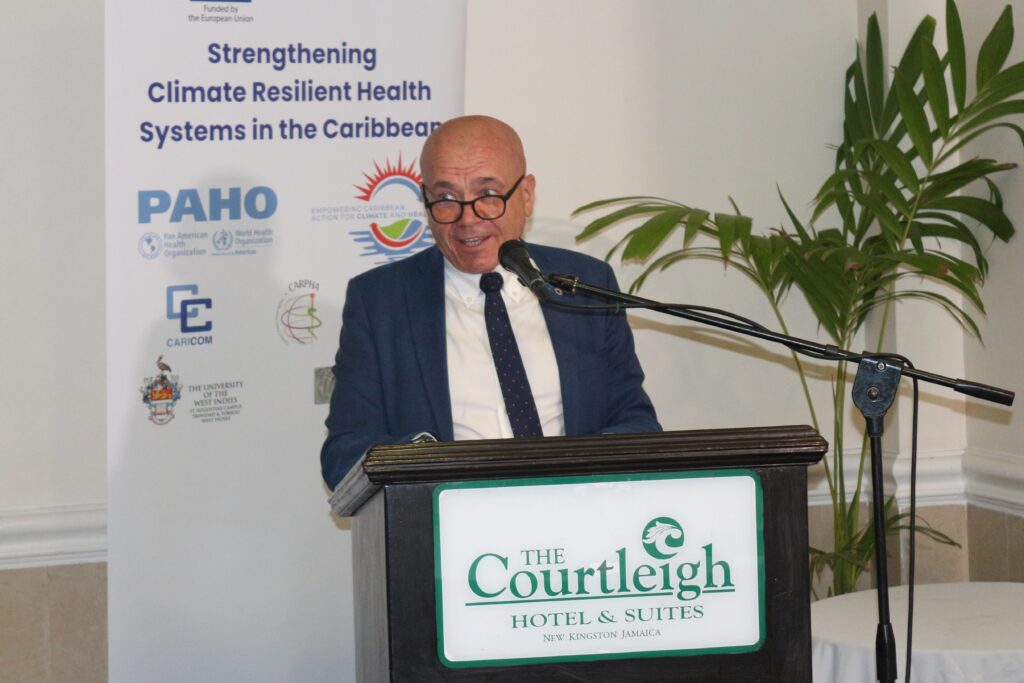
He noted that the fellowship ensured that strategies to address climate actions remain purposeful and relevant to the Caribbean context. “The European Union recognizes how the fellowship programme is a picture of the larger vision of the regional climate and health initiative with each regional implementing agency, in collaboration with the Pan American Health Organization, ensuring the success of this action through their commitment and expertise,” Mr Ruiz underlined.
Dean Chambliss, Subregional Programme Director of the PAHO Caribbean Subregional Program Coordination Office, noted that though all project outputs of the EU/CARIFORUM Climate Change and Health Project are performing well, the fellowship and the output related to Health National Adaptation Plans (H-NAPs) will exceed the identified targets.
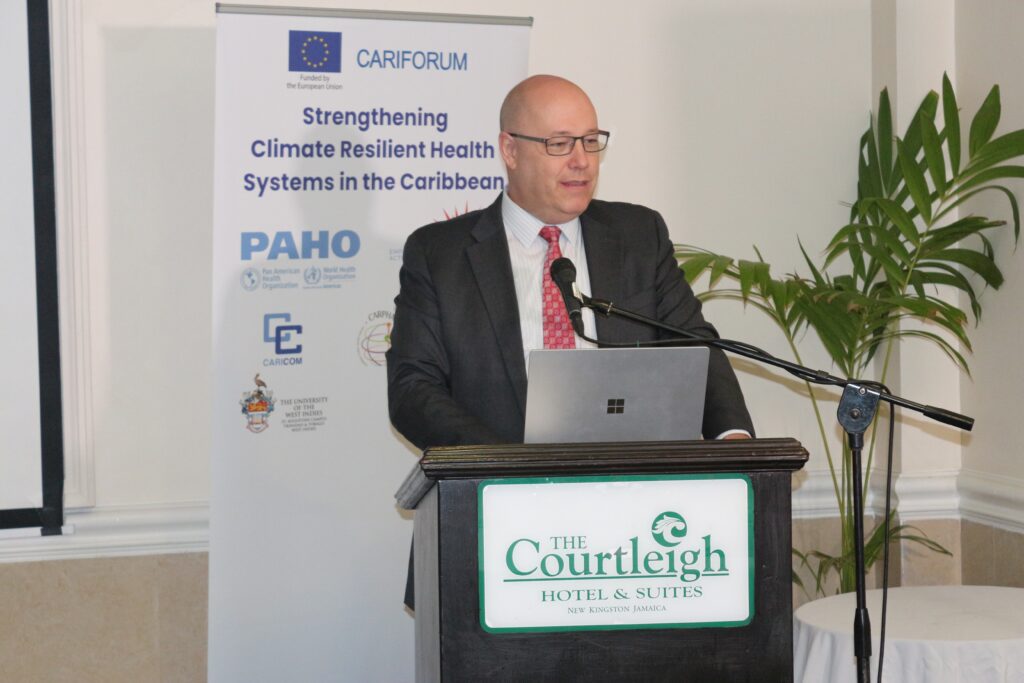
“The initial goal was the creation of an interdisciplinary cadre of 15 climate change fellows from across the region trained in Climate Change, One Health and Leadership, who can mutually support each other’s local work, are aware of leadership roles needed, and are connected with critical agencies working on Climate Change across the Caribbean. So far, we have trained 12 Climate Change and Health leaders from nine Caribbean countries and this week six more fellows will begin their year-long journey,” Mr Chambliss stated.
Co-Coordinator of the Fellowship, Professor Christopher Oura, explained that the selection process is very rigorous – critical to obtaining the right people and the right mix of people. “We are building networks of Caribbean multi-disciplinary leaders with different skills and expertise so that they can come together and support each other in tackling this really difficult problem that we are facing.
During the workshop, the graduates shared their projects and interacted with former and incoming cohorts to initiate dialogue on establishing an official network of leaders for climate and health. The third cohort are drawn from Antigua and Barbuda, Grenada, Haiti, Suriname, St Vincent and the Grenadines and Trinidad and Tobago.
The Leader’s Fellowship is one aspect of the EU/CARIFORUM Climate Change and Health Project – Strengthening Climate Resilient Health Systems in the Caribbean, which runs until the end of 2025.
This week, six more Caribbean professionals graduated from the year-long University of the West Indies (UWI) Climate Change and Health Leaders Fellowship Training Program. They are Dr Ayanna Alexander and Jenise Tyson from Trinidad and Tobago, Linnees Green-Baker and Dr Nicole Dawkins-Wright of Jamaica, Lucy Cumberbatch from Guyana, and Najay Parke of Grenada. Their graduation took place earlier this week, during a summative workshop held in Kingston, Jamaica.
The goal of the program, which is funded by the European Union (EU), is to develop strong, effective Climate Change leadership among government officials, civil society, communities, and the private sector, championing and implementing the One Health Approach which recognises the shared challenges across the region and the intricate interconnections between the health of people, animals, plants, and their shared environment.
While speaking to the graduates, Aniceto Rodriguez Ruiz, Head of Cooperation of the European Union in Jamaica, described the fellows as “testament to the vision of the fellowship programme to strengthen climate leadership in the Caribbean region through a multidisciplinary approach to this common challenge”.
He noted that the fellowship ensured that strategies to address climate actions remain purposeful and relevant to the Caribbean context. “The European Union recognizes how the fellowship programme is a picture of the larger vision of the regional climate and health initiative with each regional implementing agency, in collaboration with the Pan American Health Organization, ensuring the success of this action through their commitment and expertise,” Mr Ruiz underlined.
Dean Chambliss, Subregional Programme Director of the PAHO Caribbean Subregional Program Coordination Office, noted that though all project outputs of the EU/CARIFORUM Climate Change and Health Project are performing well, the fellowship and the output related to Health National Adaptation Plans (H-NAPs) will exceed the identified targets.
“The initial goal was the creation of an interdisciplinary cadre of 15 climate change fellows from across the region trained in Climate Change, One Health and Leadership, who can mutually support each other’s local work, are aware of leadership roles needed, and are connected with critical agencies working on Climate Change across the Caribbean. So far, we have trained 12 Climate Change and Health leaders from nine Caribbean countries and this week six more fellows will begin their year-long journey,” Mr Chambliss stated.
Co-Coordinator of the Fellowship, Professor Christopher Oura, explained that the selection process is very rigorous – critical to obtaining the right people and the right mix of people. “We are building networks of Caribbean multi-disciplinary leaders with different skills and expertise so that they can come together and support each other in tackling this really difficult problem that we are facing.
During the workshop, the graduates shared their projects and interacted with former and incoming cohorts to initiate dialogue on establishing an official network of leaders for climate and health. The third cohort are drawn from Antigua and Barbuda, Grenada, Haiti, Suriname, St Vincent and the Grenadines and Trinidad and Tobago.
The Leader’s Fellowship is one aspect of the EU/CARIFORUM Climate Change and Health Project – Strengthening Climate Resilient Health Systems in the Caribbean, which runs until the end of 2025.