/ Sep 10, 2026
Trending
OECS Press Release
The Organisation of Eastern Caribbean States (OECS) Commission proudly announces the selection of candidates for postgraduate training in Natural Resources and Environmental Management. This initiative, supported by the European Union (EU)-funded Biodiversity Support Programme for ACP Coastal Environments (BioSPACE) underscores the Commission’s steadfast commitment to sustainable development and environmental conservation across the region by strengthening capacity for effective management.
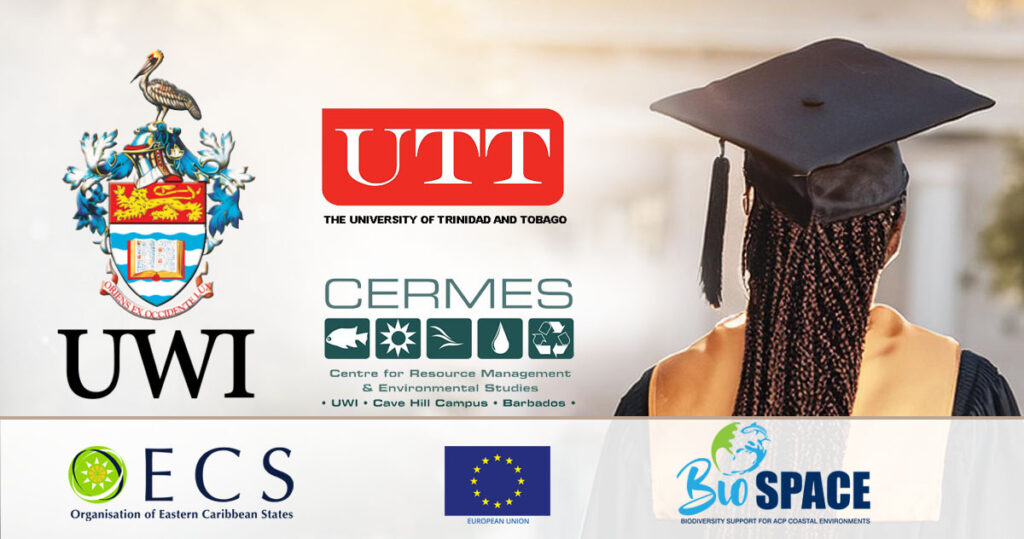
This training will be conducted in collaboration with two esteemed regional learning institutions: the University of the West Indies-Centre for Resource Management and Environmental Studies (UWI-CERMES) and the University of Trinidad and Tobago (UTT).
The selected candidates, endorsed by OECS Member States, will engage in specialized fields to enhance their expertise in natural resource and environmental management. The candidates are:
Geoinformatics and Environmental Management (UWI-CERMES):
Biodiversity and Protected Areas Management (UWI-CERMES):
Natural Resources and Environmental Management (UTT):
The OECS Commission continues to work alongside its partners to address critical capacity gaps in the region, focusing on areas such as scientific research, technical skills like geographic information systems (GIS), institutional governance, and the implementation of international agreements such as the Convention on Biological Diversity and the Sustainable Development Goals (SDGs). By fostering community engagement and awareness, these efforts aim to ensure the long-term conservation of biodiversity in the region.
The Eastern Caribbean boasts an array of unique ecosystems, from coral reefs and mangroves to seagrass beds and tropical forests, alongside a wealth of endemic and threatened species. Enhancing the capacity to protect and sustainably manage these resources is essential to securing ecological, social, and economic benefits for generations to come.
The OECS Commission, through the EU-funded Integrated Landscape Management (ILM) Project, is also providing financial support to 11 students from seven OECS Member States pursuing a two-year diploma program at the University of Trinidad and Tobago (UTT). The program focuses on the conservation and management of forestry, parks, wildlife, and the environment, to increase the capacities of actors and institutions involved in Integrated Landscape Management and approaches in OECS Member States.
These collaborative efforts with a key partner – the European Union- exemplify the OECS Commission’s dedication to advancing environmental management expertise across the region. The Commission looks forward to continued partnerships with OECS Member States in building a sustainable and prosperous future.
OECS Press Release
The Organisation of Eastern Caribbean States (OECS) Commission proudly announces the selection of candidates for postgraduate training in Natural Resources and Environmental Management. This initiative, supported by the European Union (EU)-funded Biodiversity Support Programme for ACP Coastal Environments (BioSPACE) underscores the Commission’s steadfast commitment to sustainable development and environmental conservation across the region by strengthening capacity for effective management.
This training will be conducted in collaboration with two esteemed regional learning institutions: the University of the West Indies-Centre for Resource Management and Environmental Studies (UWI-CERMES) and the University of Trinidad and Tobago (UTT).
The selected candidates, endorsed by OECS Member States, will engage in specialized fields to enhance their expertise in natural resource and environmental management. The candidates are:
Geoinformatics and Environmental Management (UWI-CERMES):
Biodiversity and Protected Areas Management (UWI-CERMES):
Natural Resources and Environmental Management (UTT):
The OECS Commission continues to work alongside its partners to address critical capacity gaps in the region, focusing on areas such as scientific research, technical skills like geographic information systems (GIS), institutional governance, and the implementation of international agreements such as the Convention on Biological Diversity and the Sustainable Development Goals (SDGs). By fostering community engagement and awareness, these efforts aim to ensure the long-term conservation of biodiversity in the region.
The Eastern Caribbean boasts an array of unique ecosystems, from coral reefs and mangroves to seagrass beds and tropical forests, alongside a wealth of endemic and threatened species. Enhancing the capacity to protect and sustainably manage these resources is essential to securing ecological, social, and economic benefits for generations to come.
The OECS Commission, through the EU-funded Integrated Landscape Management (ILM) Project, is also providing financial support to 11 students from seven OECS Member States pursuing a two-year diploma program at the University of Trinidad and Tobago (UTT). The program focuses on the conservation and management of forestry, parks, wildlife, and the environment, to increase the capacities of actors and institutions involved in Integrated Landscape Management and approaches in OECS Member States.
These collaborative efforts with a key partner – the European Union- exemplify the OECS Commission’s dedication to advancing environmental management expertise across the region. The Commission looks forward to continued partnerships with OECS Member States in building a sustainable and prosperous future.