/ Jun 09, 2026
Trending

News Elementor

RECENT NEWS

Dominica ahead with Simulation Exercise for African Swine Food

Dominica hosted a two-day African Swine Fever (ASF) Sampling Pilot on May 6th and 7th, 2026, aimed at strengthening regional surveillance and response capacity against the deadly livestock disease.

The initiative was conducted by the Inter-American Institute for Cooperation on Agriculture, IICA, and the United States Department of Agriculture, USDA, in collaboration with the Ministry of Agriculture, Fisheries, Blue and Green Economy, at the Dominica China Agricultural Science Complex in Portsmouth.

The pilot formed part of a wider regional project focused on improving surveillance, training, and sample collection across the Caribbean to support the development of an African Swine Fever Surveillance and Response Plan for Dominica and the wider CARICOM region.

African Swine Fever is a highly contagious viral disease affecting domestic and wild pigs, with a mortality rate close to 100 percent. Although the disease poses no threat to humans, officials noted that it represents a major risk to the pig farming industry, food security, farmers’ livelihoods, and regional trade.

During the first day of activities, veterinary professionals, animal health technicians, laboratory staff, quarantine officers, pig farmers, and other stakeholders participated in technical training sessions. Areas covered included recognition of ASF clinical signs, sample collection and handling procedures, biosafety and biosecurity measures, surveillance protocols, and proper packaging and transport of samples.

On the second day, joint IICA, USDA, and local veterinary teams conducted field visits to selected high-risk communities, including border areas and regions with high pig farming activity, where ear blood swab samples were collected for testing.

The samples were scheduled to be shipped to the USDA National Veterinary Services Laboratory at Plum Island for diagnostic analysis as part of efforts to improve early detection and prevent the spread of African Swine Fever across the Caribbean region.
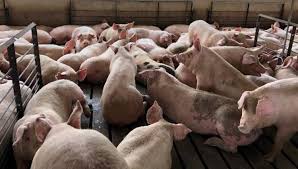

Dominica hosted a two-day African Swine Fever (ASF) Sampling Pilot on May 6th and 7th, 2026, aimed at strengthening regional surveillance and response capacity against the deadly livestock disease.

The initiative was conducted by the Inter-American Institute for Cooperation on Agriculture, IICA, and the United States Department of Agriculture, USDA, in collaboration with the Ministry of Agriculture, Fisheries, Blue and Green Economy, at the Dominica China Agricultural Science Complex in Portsmouth.

The pilot formed part of a wider regional project focused on improving surveillance, training, and sample collection across the Caribbean to support the development of an African Swine Fever Surveillance and Response Plan for Dominica and the wider CARICOM region.

African Swine Fever is a highly contagious viral disease affecting domestic and wild pigs, with a mortality rate close to 100 percent. Although the disease poses no threat to humans, officials noted that it represents a major risk to the pig farming industry, food security, farmers’ livelihoods, and regional trade.

During the first day of activities, veterinary professionals, animal health technicians, laboratory staff, quarantine officers, pig farmers, and other stakeholders participated in technical training sessions. Areas covered included recognition of ASF clinical signs, sample collection and handling procedures, biosafety and biosecurity measures, surveillance protocols, and proper packaging and transport of samples.

On the second day, joint IICA, USDA, and local veterinary teams conducted field visits to selected high-risk communities, including border areas and regions with high pig farming activity, where ear blood swab samples were collected for testing.

The samples were scheduled to be shipped to the USDA National Veterinary Services Laboratory at Plum Island for diagnostic analysis as part of efforts to improve early detection and prevent the spread of African Swine Fever across the Caribbean region.

It is a long established fact that a reader will be distracted by the readable content of a page when looking at its layout. The point of using Lorem Ipsum is that it has a more-or-less normal distribution of letters, as opposed to using ‘Content here, content here’, making it look like readable English. Many desktop publishing packages and web page editors now use Lorem Ipsum as their default model text, and a search for ‘lorem ipsum’ will uncover many web sites still in their infancy.

It is a long established fact that a reader will be distracted by the readable content of a page when looking at its layout. The point of using Lorem Ipsum is that it has a more-or-less normal distribution of letters, as opposed to using ‘Content here, content here’, making it look like readable English. Many desktop publishing packages and web page editors now use Lorem Ipsum as their default model text, and a search for ‘lorem ipsum’ will uncover many web sites still in their infancy.

The point of using Lorem Ipsum is that it has a more-or-less normal distribution of letters, as opposed to using ‘Content here, content here’, making

The point of using Lorem Ipsum is that it has a more-or-less normal distribution of letters, as opposed to using ‘Content here, content here’, making it look like readable English. Many desktop publishing packages and web page editors now use Lorem Ipsum as their default model text, and a search for ‘lorem ipsum’ will uncover many web sites still in their infancy.

EmoNews Contributor

RECENT POSTS

CATEGORIES

Leave a Reply

Your email address will not be published. Required fields are marked *

SUBSCRIBE US

We’re excited to introduce Emonew, Dominica’s fresh new source for general country news. From community updates to national stories, we’re here to keep you informed, connected, and up to date.

Copyright Emonews 2025