/ Sep 15, 2026
Trending
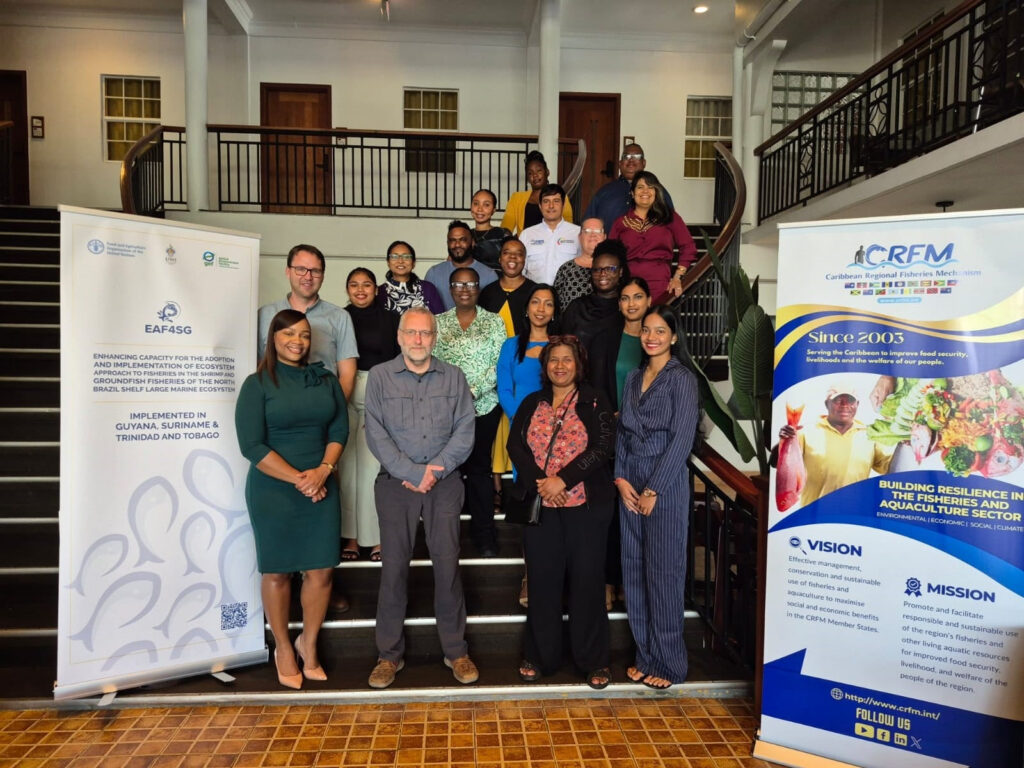
Fisheries professionals from countries within the North Brazil Shelf Large Marine Ecosystem (NBSLME) are better equipped to assess groundfish species using length-based data for actionable management advice that will bolster the sustainability of the region’s fisheries. This 5-day training and capacity-building workshop on Data-limited Assessment of the Groundfish Stocks in the North Brazil Shelf Large Marine Ecosystem was convened from August 3-7, 2026, at the Grand Coastal Hotel in Georgetown, Guyana.
The hands-on event was convened by the Caribbean Regional Fisheries Mechanism ((CRFM) through the CRFM Continental Shelf Fisheries Working Group (CRFM-CSWG), which collaborated with two institutional partners—the University of the West Indies-managed EAF4SG Project and the FAO-WECAFC Shrimp and Groundfish Working Group—working along with the national fisheries authorities of three CRFM Member States: Guyana, Suriname, and Trinidad and Tobago. The session also drew participation from Brazil and Venezuela.
CRFM Deputy Executive Director, Dr. Sandra Grant, said: “The CRFM hopes—through this series of stock assessment trainings held since 2023—to improve stock assessment capacity among data managers from the NBSLME. This will be evidenced by their enhanced knowledge and application of stock assessment methods and data-limited software tools in R.”
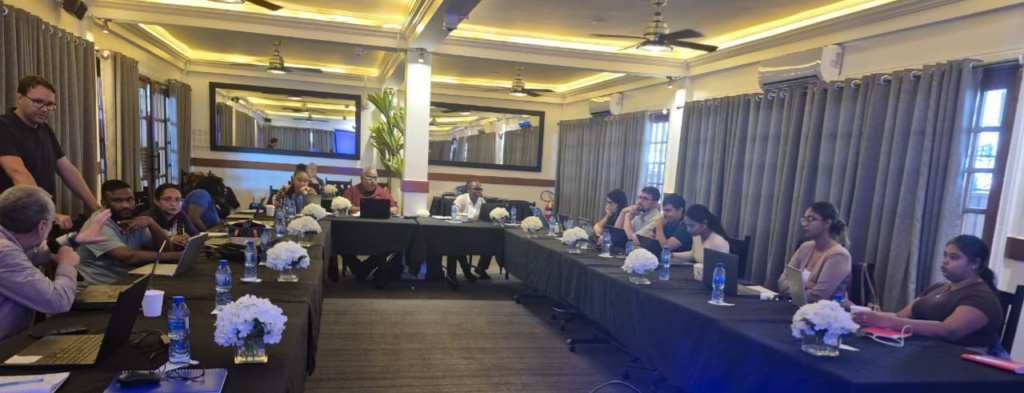
| Workshop attendees discussed the groundfish data and analyses Workshop participants were exposed to training in the collection and analysis of length data, and in developing technical management advice based on the analyses derived from them. The advice would address appropriate precautionary adjustments to harvest levels that are consistent with management objectives, as well as the subsequent monitoring of management controls. Training in management advice covered appropriate practical controls, such as technical gear changes, closed areas and seasons, as well as overall effort and catch limits. |
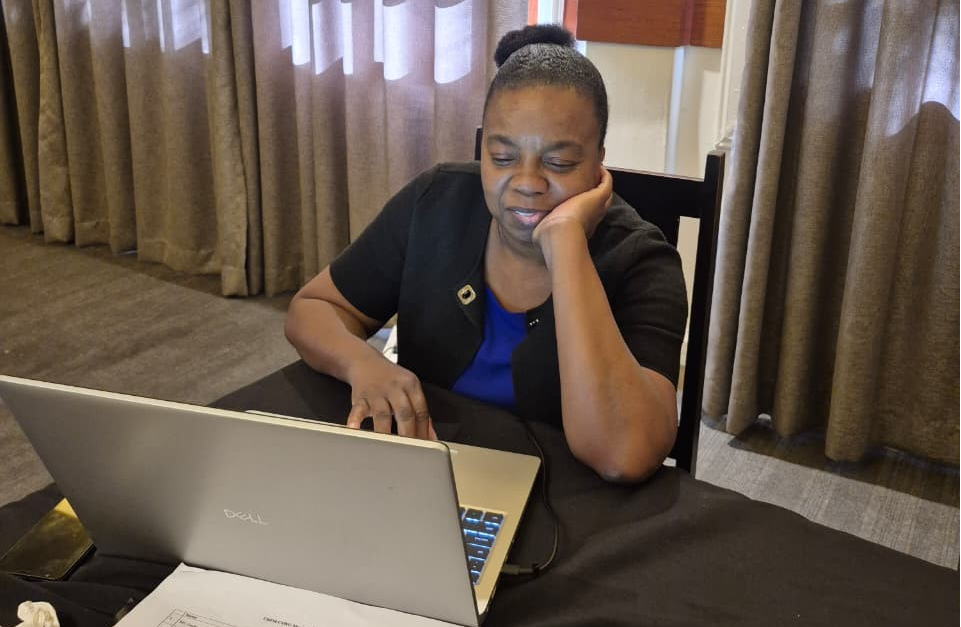
| CRFM Statistics and Information Analyst, Mrs. June Masters, crunching numbers as she analyses length-data “This workshop represents another important milestone in our ongoing collaboration with the Caribbean Regional Fisheries Mechanism (CRFM). In March 2025, we partnered to deliver similar training for participants from Guyana, Suriname, and Trinidad and Tobago. We are very pleased to again in 2026, cosponsor this very important and much needed workshop in partnership with the CRFM,” said Mrs. Nerissa Lucky, Technical & Project Coordinator, EAF4SG project (Enhancing capacity for the adoption and implementation of the Ecosystem Approach to Fisheries in the shrimp and groundfish fisheries of the North Brazil Shelf Large Marine Ecosystem). Ms. Gitanjali Chandarpal, Assistant Representative, the United Nations Food and Agriculture Organization (FAO), added that, “Maintaining sustainable fisheries is crucial, and reliable stock assessments are the cornerstone of sustainable fisheries management. Even where data is limited, robust scientific methods allow us to reduce uncertainty, support evidence-based decision-making and apply precautionary approaches that safeguard both marine ecosystems and the livelihoods that depend upon them.” Mrs. Selvine Stephenson-Grant, Deputy Programme Manager, Agricultural & Agro-Industrial Development, Caribbean Community (CARICOM) Secretariat, noted that, “Through the work of the Caribbean Regional Fisheries Mechanism, Member States continue to pursue greater cooperation in the sustainable use and management of shared fisheries resources. As the Community advances implementation of initiatives aimed at strengthening regional food systems, sustainable fisheries will continue to play an increasingly important role in ensuring healthy diets, supporting livelihoods, and building resilience across the Caribbean.” She conveyed commendations from the CARICOM Secretariat to the CRFM Secretariat, the Government of Guyana, the FAO, the EAF4SG Project, and all participating Member States and partners for their continued leadership and commitment to sustainable fisheries management. Ms. Desha Husbands, Fisheries Officer, who addressed participants on behalf of the Government of Guyana, said: “We cannot manage what we cannot measure, and we cannot manage what we don’t know. This training workshop, facilitated by the CRFM and the EAF4SG project, addresses this need by strengthening our technical capacity through the ecosystem approach to fisheries. We can now move from a point of intuition to a point of evidence-based management.” |
 |
| Dr. Tomas Willems (left) with Dr. Paul Medley at CSWG workshop The expected outcomes of the training and capacity-building workshop on Data-limited Assessment of the Groundfish Stocks in the North Brazil Shelf Large Marine Ecosystem include: Improved stock assessment capacity among data managers;Stock assessment reports produced for completed assessments;Improved groundfish data collection methods, featuring updated protocols to support more accurate stock assessments;Enhanced understanding of the use of length-based assessment methods to support fisheries management decision-making;Increased capacity to apply precautionary approaches in recommending harvest adjustments and management measures using Management Strategy Evaluations; andIncreased capacity to develop appropriate fisheries management controls, including gear modifications, closed seasons or areas, effort controls, and catch limits. Dr. Tomas Willems, Head of Research & Statistics, Suriname Fisheries Department, said: “A key takeaway is that, although length-based methods do not require the long historical time series of data needed for many traditional stock assessment models, the data must still be of high quality and collected through rigorous, well-designed sampling programs. Furthermore, a sound understanding of the life history and biology of the species being assessed remains essential for obtaining reliable results.” Dr. Paul Medley, the consultant who delivered the training, said: “It’s been very productive. We made a lot of progress again. I hope that we can sustain this level of effort in trying to determine stock status. We are also developing appropriate methods for the Caribbean, so that we can monitor our stocks, our fisheries, and move towards more sustainable use.” |
Fisheries professionals from countries within the North Brazil Shelf Large Marine Ecosystem (NBSLME) are better equipped to assess groundfish species using length-based data for actionable management advice that will bolster the sustainability of the region’s fisheries. This 5-day training and capacity-building workshop on Data-limited Assessment of the Groundfish Stocks in the North Brazil Shelf Large Marine Ecosystem was convened from August 3-7, 2026, at the Grand Coastal Hotel in Georgetown, Guyana.
The hands-on event was convened by the Caribbean Regional Fisheries Mechanism ((CRFM) through the CRFM Continental Shelf Fisheries Working Group (CRFM-CSWG), which collaborated with two institutional partners—the University of the West Indies-managed EAF4SG Project and the FAO-WECAFC Shrimp and Groundfish Working Group—working along with the national fisheries authorities of three CRFM Member States: Guyana, Suriname, and Trinidad and Tobago. The session also drew participation from Brazil and Venezuela.
CRFM Deputy Executive Director, Dr. Sandra Grant, said: “The CRFM hopes—through this series of stock assessment trainings held since 2023—to improve stock assessment capacity among data managers from the NBSLME. This will be evidenced by their enhanced knowledge and application of stock assessment methods and data-limited software tools in R.”
| Workshop attendees discussed the groundfish data and analyses Workshop participants were exposed to training in the collection and analysis of length data, and in developing technical management advice based on the analyses derived from them. The advice would address appropriate precautionary adjustments to harvest levels that are consistent with management objectives, as well as the subsequent monitoring of management controls. Training in management advice covered appropriate practical controls, such as technical gear changes, closed areas and seasons, as well as overall effort and catch limits. |
| CRFM Statistics and Information Analyst, Mrs. June Masters, crunching numbers as she analyses length-data “This workshop represents another important milestone in our ongoing collaboration with the Caribbean Regional Fisheries Mechanism (CRFM). In March 2025, we partnered to deliver similar training for participants from Guyana, Suriname, and Trinidad and Tobago. We are very pleased to again in 2026, cosponsor this very important and much needed workshop in partnership with the CRFM,” said Mrs. Nerissa Lucky, Technical & Project Coordinator, EAF4SG project (Enhancing capacity for the adoption and implementation of the Ecosystem Approach to Fisheries in the shrimp and groundfish fisheries of the North Brazil Shelf Large Marine Ecosystem). Ms. Gitanjali Chandarpal, Assistant Representative, the United Nations Food and Agriculture Organization (FAO), added that, “Maintaining sustainable fisheries is crucial, and reliable stock assessments are the cornerstone of sustainable fisheries management. Even where data is limited, robust scientific methods allow us to reduce uncertainty, support evidence-based decision-making and apply precautionary approaches that safeguard both marine ecosystems and the livelihoods that depend upon them.” Mrs. Selvine Stephenson-Grant, Deputy Programme Manager, Agricultural & Agro-Industrial Development, Caribbean Community (CARICOM) Secretariat, noted that, “Through the work of the Caribbean Regional Fisheries Mechanism, Member States continue to pursue greater cooperation in the sustainable use and management of shared fisheries resources. As the Community advances implementation of initiatives aimed at strengthening regional food systems, sustainable fisheries will continue to play an increasingly important role in ensuring healthy diets, supporting livelihoods, and building resilience across the Caribbean.” She conveyed commendations from the CARICOM Secretariat to the CRFM Secretariat, the Government of Guyana, the FAO, the EAF4SG Project, and all participating Member States and partners for their continued leadership and commitment to sustainable fisheries management. Ms. Desha Husbands, Fisheries Officer, who addressed participants on behalf of the Government of Guyana, said: “We cannot manage what we cannot measure, and we cannot manage what we don’t know. This training workshop, facilitated by the CRFM and the EAF4SG project, addresses this need by strengthening our technical capacity through the ecosystem approach to fisheries. We can now move from a point of intuition to a point of evidence-based management.” |
|
| Dr. Tomas Willems (left) with Dr. Paul Medley at CSWG workshop The expected outcomes of the training and capacity-building workshop on Data-limited Assessment of the Groundfish Stocks in the North Brazil Shelf Large Marine Ecosystem include: Improved stock assessment capacity among data managers;Stock assessment reports produced for completed assessments;Improved groundfish data collection methods, featuring updated protocols to support more accurate stock assessments;Enhanced understanding of the use of length-based assessment methods to support fisheries management decision-making;Increased capacity to apply precautionary approaches in recommending harvest adjustments and management measures using Management Strategy Evaluations; andIncreased capacity to develop appropriate fisheries management controls, including gear modifications, closed seasons or areas, effort controls, and catch limits. Dr. Tomas Willems, Head of Research & Statistics, Suriname Fisheries Department, said: “A key takeaway is that, although length-based methods do not require the long historical time series of data needed for many traditional stock assessment models, the data must still be of high quality and collected through rigorous, well-designed sampling programs. Furthermore, a sound understanding of the life history and biology of the species being assessed remains essential for obtaining reliable results.” Dr. Paul Medley, the consultant who delivered the training, said: “It’s been very productive. We made a lot of progress again. I hope that we can sustain this level of effort in trying to determine stock status. We are also developing appropriate methods for the Caribbean, so that we can monitor our stocks, our fisheries, and move towards more sustainable use.” |