/ Jun 20, 2026
Trending
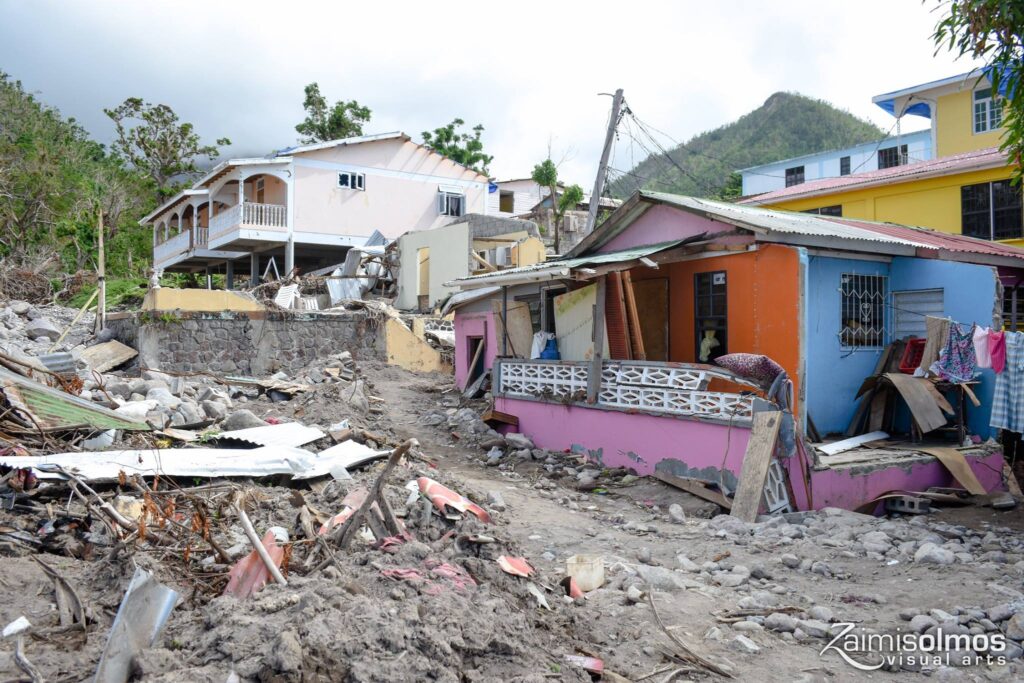
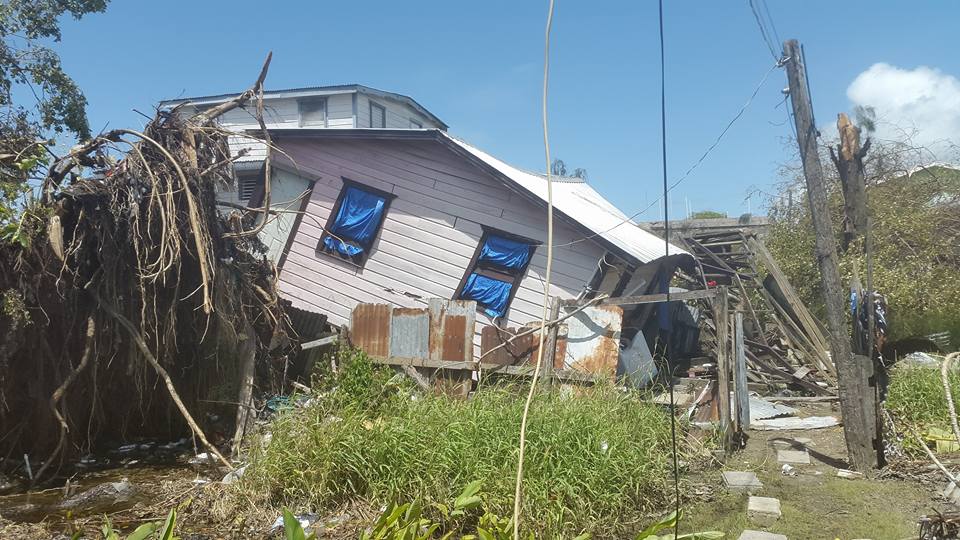
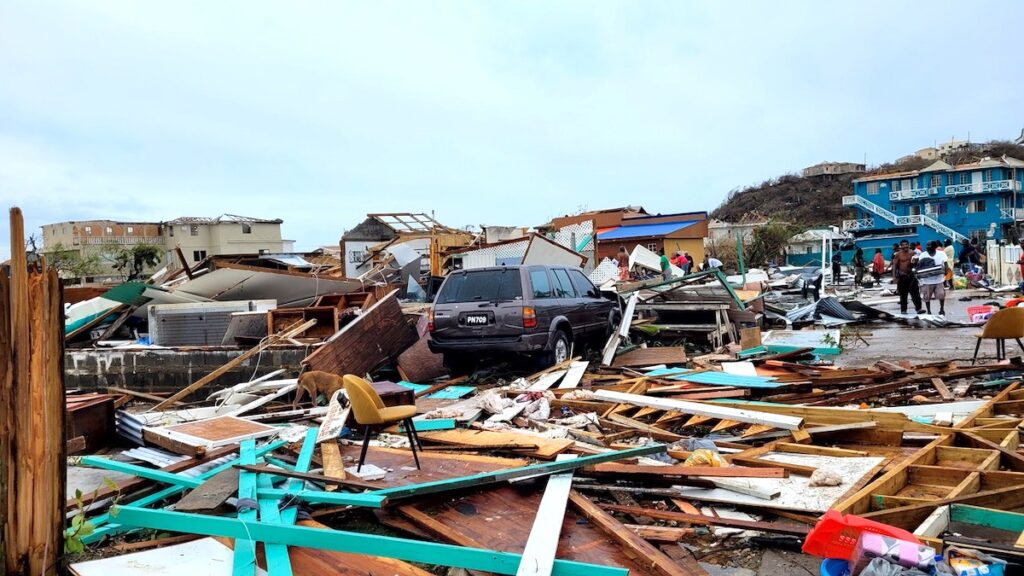
Whitney Mélinard still remembers the moment Hurricane Maria’s winds tore through Dominica in 2017. As lightning flashed outside her window, she realized the neighboring house had completely vanished. “I questioned, was the house there? Was it further behind? There was not a structure. There was nothing,” she recounts.
“I remember seeing the door of our kitchen being flown off and then minutes later the roof peeled away,” she recalls. Whitney and her mother huddled together in their bathroom, with a basin over Whitney’s head for protection. When the eye of the storm brought temporary calm, they ran barefoot to a neighbour’s house, searching for shelter as her home lay in ruins behind her.
The Caribbean’s Shared Reality
Her story is far from unique. Across the Caribbean, people grapple with the immediate effects of climate disasters and the struggle that follows when recovery funds fall short or financial systems fail to deliver when needed most.
In St. Vincent and the Grenadines, lawyer and founder of Equal Rights, Access and Opportunities SVG Inc., Jeshua Bardoo, has witnessed a similar pattern of inadequate recovery, most recently after Hurricane Beryl in 2024 and the La Soufrière volcanic eruption in 2021.
“People are still impacted, we haven’t even fully healed from what has taken place. A lot of people are still struggling,” Jeshua explains. “Foreign aid usually mobilizes quickly, but in terms of getting the actual resources to people on the ground, that’s the issue.”
The systematic failures in disaster financing create what Jeshua describes as a frustrating choice for survivors: “People often wait and see if anything would happen. Some don’t get anything. And then some persons just take things into their own hands and say, ‘Let me just go and take out that loan, let me just start to rebuild instead of waiting on help.’”
Retired Lieutenant Colonel Shelton Defour, who spent over 20 years serving in Belize’s National Emergency Management Organization—including 10 years as the National Emergency Coordinator—has observed the same gap between disaster recovery expectations and reality.
“The biggest misconception is that people believe that the funding provided will meet all the needs of the affected population,” he explains. “We hear money is coming in from various countries, and grants are being provided, so there must be enough money for me to get everything I need.”
“It’s a finite resource, and you have to prioritize the most affected people, the worst-hit areas, and the biggest needs of the population at that point in time,” expressed Defour.
The reality is far more complex. Disaster funding often comes with strict conditions from donors or lenders. The bureaucratic processes required to receive and distribute funds can take months, time that disaster victims simply don’t have.
The Houses That Can’t Withstand the Wind
After Hurricane Earl hit Belize in 2016, Defour’s team uncovered a disturbing reality during their street-by-street assessments.
“We saw homes where you could put your hand literally through the wall,” he recalls. “If Belize City is impacted again, the same vulnerable communities like Port Loyola, Lake Independence, Mesopotamia, and Collet will be in a similar situation due to the housing stock.”
This creates a cruel cycle: the most vulnerable people live in the most fragile structures, yet disaster recovery funds rarely address this fundamental issue.
“A Category 5 hurricane would cause hundreds of millions in losses,” Defour warns. The solution isn’t just emergency response, but ensuring “solid structures that will protect people even if they evacuate. When they return home, a structure will be there intact that they could go into to continue to cope and survive.”
Without fixing this underlying vulnerability, even the most sophisticated disaster financing will fall short.
“What NEMO looked at, at the time, was to ensure that the assessments were integrated,” Defour explains. “We created multidisciplinary teams and a unified assessment form that captured data needed by all sectors, reducing both gaps and duplications.”
This approach highlights how disaster management policies must evolve based on the realities on the ground. But it also highlights a troubling pattern: too often, these lessons must be learned through painful experience rather than proactive planning.
The Quiet, Prolonged Struggle
Three years after Hurricane Maria devastated Dominica, Whitney observed her Indigenous Kalinago community still struggling with a seemingly simple yet crucial problem.
“The lack of broadband Wi-Fi internet access in the territory was one of the biggest challenges,” Whitney explains. “We did not have service and internet, and it created a situation where students and teachers really struggled.”
In a territory with poverty rates approaching 50%, according to Dominica’s 2011 census, families were forced to spend over $120 monthly on limited data packages just so their children could attend online school. This was an impossible burden for many, especially single-parent households with multiple children.
Communities Creating Their Own Solutions
Without proper support systems, communities innovate out of necessity.
As the internet remained unavailable in their area, Whitney’s Kalinago community built their own community-wide Wi-Fi mesh network that is now open and free and serves the entire territory.
“The community members came together, and that was one of the most amazing things – seeing how there is potential. With the right push, how so much can come out of that,” she says with pride.
Defour believes this kind of local empowerment is essential. “The responsibility of self-sustainability, survival, and self-care is on you, the individual and the family. So, you have to have certain things in place to absorb a portion of the shock.” But he emphasizes that government systems must be ready to support those who cannot help themselves.
The Financial Instruments Available but Unused
When disaster strikes, Caribbean nations face a puzzling reality: despite financial instruments designed to help, the money rarely arrives when and where it’s needed most.
Take Hurricane Beryl in 2024. The Caribbean’s insurance facility CCRIF made a record-breaking payout of US$44 million to Grenada—their largest ever. Yet this “historic” sum covered just 20% of what Grenada actually needed to recover.
Why don’t Caribbean nations better use the financial instruments available? Jwala Rambarran, who researched how the World Bank could better help Caribbean countries, discovered a surprising answer: many officials simply don’t understand them. While Jamaica stands out with a relatively advanced disaster risk financing strategy, most Caribbean nations struggle to integrate available tools effectively.
“Ask government technocrats the difference between a CAT bond and a CAT DDO, and which fits their country’s needs—they do not understand the differences between the instruments,” Rambarran explains.
Breaking the Cycle: Five Critical Changes Needed
For the World Bank and other multilateral development banks to truly serve Caribbean nations, the Caribbean Policy Development Centre’s publication, “How Can the World Bank Better Support Natural Disaster Risk Financing in Caribbean SIDS?” points to five essential reforms:
These reforms become increasingly urgent as climate change intensifies. Every hurricane season brings new threats of devastation to communities still struggling to recover from previous disasters.
As Jeshua urgently states: “We need to be proactive and ensure that the mechanisms, the institutions, the processes are in place to help people rather than just waiting until a disaster comes.”
For Indigenous communities, disasters threaten cultural survival itself. “Climate disasters are accelerating the erasure of ancestral knowledge and practices,” Whitney emphasizes. “We lost our trees, the raw materials for our basket weaving and healing. Disaster recovery also involves mourning cultural losses that can’t be replaced with external aid.”
The voices from these frontline communities must also shape these reforms. As Whitney powerfully states: “Decision makers’ frameworks for disaster recovery are dangerously incomplete without addressing the non-economic loss and cultural impacts. While we need repaired infrastructure and housing, we also need a recognition that climate disasters are threatening our cultural survival and our identity.”
Until international financial institutions truly listen to these frontline voices, the gap between sophisticated financial instruments and meaningful recovery will continue to widen, with devastating human consequences across a region increasingly at climate risk.
PHOTO CAPTIONS & CREDITS
Whitney Mélinard still remembers the moment Hurricane Maria’s winds tore through Dominica in 2017. As lightning flashed outside her window, she realized the neighboring house had completely vanished. “I questioned, was the house there? Was it further behind? There was not a structure. There was nothing,” she recounts.
“I remember seeing the door of our kitchen being flown off and then minutes later the roof peeled away,” she recalls. Whitney and her mother huddled together in their bathroom, with a basin over Whitney’s head for protection. When the eye of the storm brought temporary calm, they ran barefoot to a neighbour’s house, searching for shelter as her home lay in ruins behind her.
The Caribbean’s Shared Reality
Her story is far from unique. Across the Caribbean, people grapple with the immediate effects of climate disasters and the struggle that follows when recovery funds fall short or financial systems fail to deliver when needed most.
In St. Vincent and the Grenadines, lawyer and founder of Equal Rights, Access and Opportunities SVG Inc., Jeshua Bardoo, has witnessed a similar pattern of inadequate recovery, most recently after Hurricane Beryl in 2024 and the La Soufrière volcanic eruption in 2021.
“People are still impacted, we haven’t even fully healed from what has taken place. A lot of people are still struggling,” Jeshua explains. “Foreign aid usually mobilizes quickly, but in terms of getting the actual resources to people on the ground, that’s the issue.”
The systematic failures in disaster financing create what Jeshua describes as a frustrating choice for survivors: “People often wait and see if anything would happen. Some don’t get anything. And then some persons just take things into their own hands and say, ‘Let me just go and take out that loan, let me just start to rebuild instead of waiting on help.’”
Retired Lieutenant Colonel Shelton Defour, who spent over 20 years serving in Belize’s National Emergency Management Organization—including 10 years as the National Emergency Coordinator—has observed the same gap between disaster recovery expectations and reality.
“The biggest misconception is that people believe that the funding provided will meet all the needs of the affected population,” he explains. “We hear money is coming in from various countries, and grants are being provided, so there must be enough money for me to get everything I need.”
“It’s a finite resource, and you have to prioritize the most affected people, the worst-hit areas, and the biggest needs of the population at that point in time,” expressed Defour.
The reality is far more complex. Disaster funding often comes with strict conditions from donors or lenders. The bureaucratic processes required to receive and distribute funds can take months, time that disaster victims simply don’t have.
The Houses That Can’t Withstand the Wind
After Hurricane Earl hit Belize in 2016, Defour’s team uncovered a disturbing reality during their street-by-street assessments.
“We saw homes where you could put your hand literally through the wall,” he recalls. “If Belize City is impacted again, the same vulnerable communities like Port Loyola, Lake Independence, Mesopotamia, and Collet will be in a similar situation due to the housing stock.”
This creates a cruel cycle: the most vulnerable people live in the most fragile structures, yet disaster recovery funds rarely address this fundamental issue.
“A Category 5 hurricane would cause hundreds of millions in losses,” Defour warns. The solution isn’t just emergency response, but ensuring “solid structures that will protect people even if they evacuate. When they return home, a structure will be there intact that they could go into to continue to cope and survive.”
Without fixing this underlying vulnerability, even the most sophisticated disaster financing will fall short.
“What NEMO looked at, at the time, was to ensure that the assessments were integrated,” Defour explains. “We created multidisciplinary teams and a unified assessment form that captured data needed by all sectors, reducing both gaps and duplications.”
This approach highlights how disaster management policies must evolve based on the realities on the ground. But it also highlights a troubling pattern: too often, these lessons must be learned through painful experience rather than proactive planning.
The Quiet, Prolonged Struggle
Three years after Hurricane Maria devastated Dominica, Whitney observed her Indigenous Kalinago community still struggling with a seemingly simple yet crucial problem.
“The lack of broadband Wi-Fi internet access in the territory was one of the biggest challenges,” Whitney explains. “We did not have service and internet, and it created a situation where students and teachers really struggled.”
In a territory with poverty rates approaching 50%, according to Dominica’s 2011 census, families were forced to spend over $120 monthly on limited data packages just so their children could attend online school. This was an impossible burden for many, especially single-parent households with multiple children.
Communities Creating Their Own Solutions
Without proper support systems, communities innovate out of necessity.
As the internet remained unavailable in their area, Whitney’s Kalinago community built their own community-wide Wi-Fi mesh network that is now open and free and serves the entire territory.
“The community members came together, and that was one of the most amazing things – seeing how there is potential. With the right push, how so much can come out of that,” she says with pride.
Defour believes this kind of local empowerment is essential. “The responsibility of self-sustainability, survival, and self-care is on you, the individual and the family. So, you have to have certain things in place to absorb a portion of the shock.” But he emphasizes that government systems must be ready to support those who cannot help themselves.
The Financial Instruments Available but Unused
When disaster strikes, Caribbean nations face a puzzling reality: despite financial instruments designed to help, the money rarely arrives when and where it’s needed most.
Take Hurricane Beryl in 2024. The Caribbean’s insurance facility CCRIF made a record-breaking payout of US$44 million to Grenada—their largest ever. Yet this “historic” sum covered just 20% of what Grenada actually needed to recover.
Why don’t Caribbean nations better use the financial instruments available? Jwala Rambarran, who researched how the World Bank could better help Caribbean countries, discovered a surprising answer: many officials simply don’t understand them. While Jamaica stands out with a relatively advanced disaster risk financing strategy, most Caribbean nations struggle to integrate available tools effectively.
“Ask government technocrats the difference between a CAT bond and a CAT DDO, and which fits their country’s needs—they do not understand the differences between the instruments,” Rambarran explains.
Breaking the Cycle: Five Critical Changes Needed
For the World Bank and other multilateral development banks to truly serve Caribbean nations, the Caribbean Policy Development Centre’s publication, “How Can the World Bank Better Support Natural Disaster Risk Financing in Caribbean SIDS?” points to five essential reforms:
These reforms become increasingly urgent as climate change intensifies. Every hurricane season brings new threats of devastation to communities still struggling to recover from previous disasters.
As Jeshua urgently states: “We need to be proactive and ensure that the mechanisms, the institutions, the processes are in place to help people rather than just waiting until a disaster comes.”
For Indigenous communities, disasters threaten cultural survival itself. “Climate disasters are accelerating the erasure of ancestral knowledge and practices,” Whitney emphasizes. “We lost our trees, the raw materials for our basket weaving and healing. Disaster recovery also involves mourning cultural losses that can’t be replaced with external aid.”
The voices from these frontline communities must also shape these reforms. As Whitney powerfully states: “Decision makers’ frameworks for disaster recovery are dangerously incomplete without addressing the non-economic loss and cultural impacts. While we need repaired infrastructure and housing, we also need a recognition that climate disasters are threatening our cultural survival and our identity.”
Until international financial institutions truly listen to these frontline voices, the gap between sophisticated financial instruments and meaningful recovery will continue to widen, with devastating human consequences across a region increasingly at climate risk.
PHOTO CAPTIONS & CREDITS