/ Jul 15, 2026
Trending
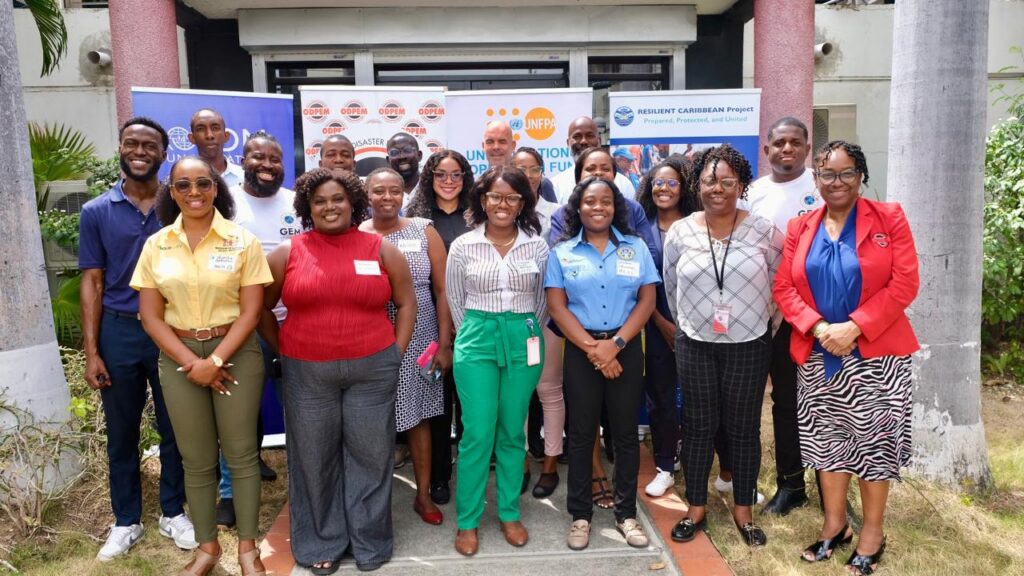
Some 24 experienced disaster responders from across the Caribbean began the Last Mile Distribution Training of Trainers today at the Office of Disaster Preparedness and Emergency Management (ODPEM) in Kingston. The three-day, hands-on course will train Caribbean responders to get emergency relief the last mile to disaster-affected families safely, fairly and without delay.
Running from 14 to 16 July 2026, the training brings together participants from four Caribbean countries and territories — Dominica, Jamaica, Saint Lucia, and Saint Vincent and the Grenadines — including national disaster management offices, humanitarian organizations and community responders. ODPEM is hosting the course, facilitated by the International Organization for Migration (IOM), the Caribbean Disaster Emergency Management Agency (CDEMA) and the United Nations Population Fund (UNFPA).
A 2025 regional assessment identified fair and efficient distribution as a critical gap in disaster response. Recent emergencies, including Hurricane Beryl in 2024 and Hurricane Melissa in 2025, showed the importance of ensuring relief items such as tarpaulins, solar lanterns and hygiene kits reach affected households quickly and safely, even when roads and infrastructure are damaged. IOM’s Coordinator in the Caribbean, Mr. Patrice Quesada, noted that “Caribbean preparedness is improved when the region’s own responders are trained, and can pass their knowledge on, building a lasting pool of Caribbean professionals who can run safe, dignified distributions.”
The course follows a “learn by doing” approach, using simulations to strengthen distribution planning and registration; site layout and crowd flow; accountability to affected communities; protection from gender-based violence and abuse at distribution points; supply chain and stock readiness; and post-distribution monitoring. “Our responders know their communities better than anyone. This training gives them practical, tested skills to get relief to people safely and with dignity — so that after the next storm, people in Jamaica and the Caribbean receive what they need, when they need it.”
Mr. Richard Thompson, Deputy Director General, Office of Disaster Preparedness and Emergency Management (ODPEM), Jamaica
For families forced from their homes, well-managed distributions make accessing relief safer, more dignified, more informed and more efficient. Mr. Andre Fache, Programme Manager at the Delegation of the European Union to Jamaica, Belize and the Bahamas, said: “Strengthening institutional and technical capacities at both national and regional levels remains a key priority for the European Union. Effective last-mile distribution is essential to ensure that life-saving assistance reaches the most vulnerable people quickly, safely, and equitably”.
Each newly certified trainer will cascade the training in their own organization, extending the reach to approximately 300 field staff across the region. Graduates will also stay connected through a Caribbean cohort of practice, supporting a shared standard for relief distribution.
The training is part of the wider Resilient Caribbean Project and will be followed by a Caribbean Advanced Emergency Shelter Training of Trainers in Barbados from 21 to 23 July 2026. These activities are funded by European Union Humanitarian Aid under the Resilient Caribbean Project “Fostering Collaborative Approaches to Disaster Preparedness in the Caribbean”, implemented by IOM, with the objective of strengthening human mobility frameworks, and building capacity to address disaster displacement.
Some 24 experienced disaster responders from across the Caribbean began the Last Mile Distribution Training of Trainers today at the Office of Disaster Preparedness and Emergency Management (ODPEM) in Kingston. The three-day, hands-on course will train Caribbean responders to get emergency relief the last mile to disaster-affected families safely, fairly and without delay.
Running from 14 to 16 July 2026, the training brings together participants from four Caribbean countries and territories — Dominica, Jamaica, Saint Lucia, and Saint Vincent and the Grenadines — including national disaster management offices, humanitarian organizations and community responders. ODPEM is hosting the course, facilitated by the International Organization for Migration (IOM), the Caribbean Disaster Emergency Management Agency (CDEMA) and the United Nations Population Fund (UNFPA).
A 2025 regional assessment identified fair and efficient distribution as a critical gap in disaster response. Recent emergencies, including Hurricane Beryl in 2024 and Hurricane Melissa in 2025, showed the importance of ensuring relief items such as tarpaulins, solar lanterns and hygiene kits reach affected households quickly and safely, even when roads and infrastructure are damaged. IOM’s Coordinator in the Caribbean, Mr. Patrice Quesada, noted that “Caribbean preparedness is improved when the region’s own responders are trained, and can pass their knowledge on, building a lasting pool of Caribbean professionals who can run safe, dignified distributions.”
The course follows a “learn by doing” approach, using simulations to strengthen distribution planning and registration; site layout and crowd flow; accountability to affected communities; protection from gender-based violence and abuse at distribution points; supply chain and stock readiness; and post-distribution monitoring. “Our responders know their communities better than anyone. This training gives them practical, tested skills to get relief to people safely and with dignity — so that after the next storm, people in Jamaica and the Caribbean receive what they need, when they need it.”
Mr. Richard Thompson, Deputy Director General, Office of Disaster Preparedness and Emergency Management (ODPEM), Jamaica
For families forced from their homes, well-managed distributions make accessing relief safer, more dignified, more informed and more efficient. Mr. Andre Fache, Programme Manager at the Delegation of the European Union to Jamaica, Belize and the Bahamas, said: “Strengthening institutional and technical capacities at both national and regional levels remains a key priority for the European Union. Effective last-mile distribution is essential to ensure that life-saving assistance reaches the most vulnerable people quickly, safely, and equitably”.
Each newly certified trainer will cascade the training in their own organization, extending the reach to approximately 300 field staff across the region. Graduates will also stay connected through a Caribbean cohort of practice, supporting a shared standard for relief distribution.
The training is part of the wider Resilient Caribbean Project and will be followed by a Caribbean Advanced Emergency Shelter Training of Trainers in Barbados from 21 to 23 July 2026. These activities are funded by European Union Humanitarian Aid under the Resilient Caribbean Project “Fostering Collaborative Approaches to Disaster Preparedness in the Caribbean”, implemented by IOM, with the objective of strengthening human mobility frameworks, and building capacity to address disaster displacement.
It is a long established fact that a reader will be distracted by the readable content of a page when looking at its layout. The point of using Lorem Ipsum is that it has a more-or-less normal distribution of letters, as opposed to using ‘Content here, content here’, making it look like readable English. Many desktop publishing packages and web page editors now use Lorem Ipsum as their default model text, and a search for ‘lorem ipsum’ will uncover many web sites still in their infancy.
The point of using Lorem Ipsum is that it has a more-or-less normal distribution of letters, as opposed to using ‘Content here, content here’, making
The point of using Lorem Ipsum is that it has a more-or-less normal distribution of letters, as opposed to using ‘Content here, content here’, making it look like readable English. Many desktop publishing packages and web page editors now use Lorem Ipsum as their default model text, and a search for ‘lorem ipsum’ will uncover many web sites still in their infancy.
We’re excited to introduce Emonew, Dominica’s fresh new source for general country news. From community updates to national stories, we’re here to keep you informed, connected, and up to date.
Copyright Emonews 2025