/ Aug 13, 2026
Trending
Emonews
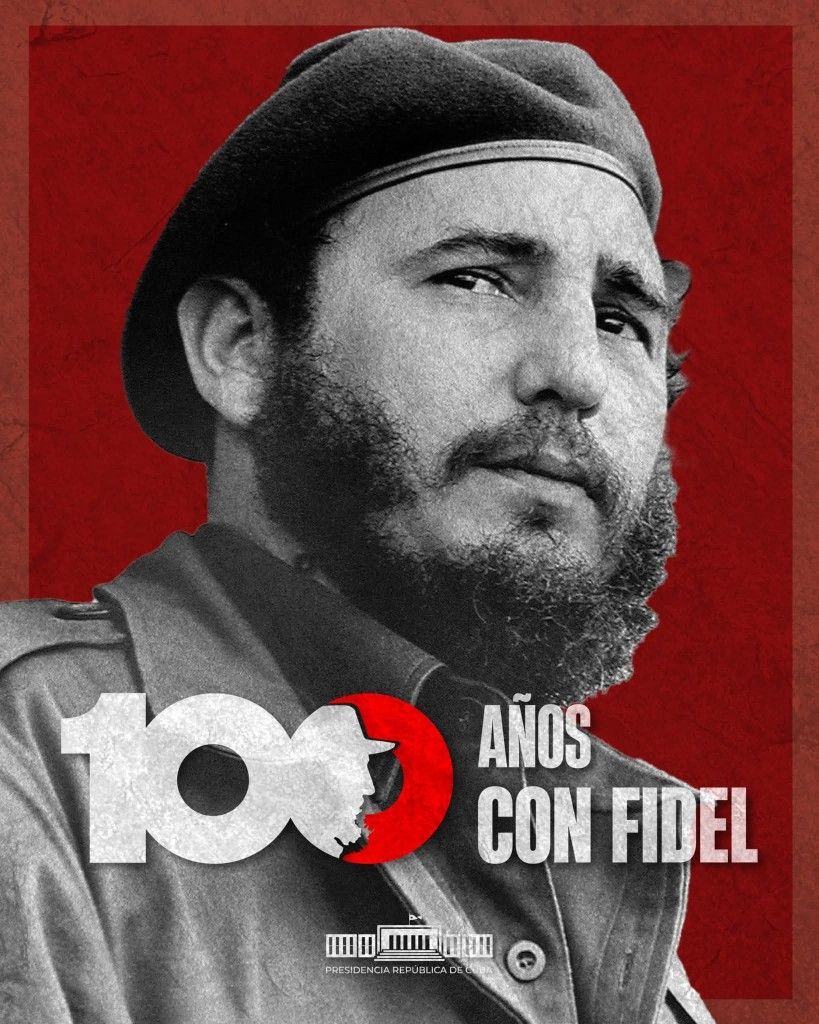
Today, August 13, 2026, Cuba commemorates the 100th anniversary of the birth of Fidel Castro, the historic leader of the Cuban Revolution.
But on this centenary, we are not paying tribute to a title. We are remembering and honouring a human being: a man whose life, ideas and convictions profoundly shaped Cuba and whose influence reached far beyond its shores.
For Cubans, this is not simply the anniversary of a historical figure. It is an opportunity to reflect on what was built, what we are proud of and what we continue to defend.
Under Fidel’s leadership, the Cuban Revolution placed independence, sovereignty and self-determination, alongside education, public health, science and human dignity, at the centre of national life.
The Revolution made education and health care universal and free. Cuba eradicated illiteracy and built a universal public health system based on the principle that education and health are rights, not privileges. It trained generations of doctors and professionals and developed scientific capacities that have allowed the country to contribute to the health and development of other nations.
One expression of that legacy can be found here, in Dominica.
When Dominica became independent in 1978, Fidel and Cuba responded to its call for support. In 1979, the first Dominican students travelled to Cuba. Since then, more than 400 Dominicans have graduated from Cuban institutions of higher education, including more than 130 doctors. Cuban cooperation has also accompanied Dominica in health, education, construction and other areas of importance.
This year, we celebrate not only Fidel’s centenary, but also the 30th anniversary of diplomatic relations between Cuba and Dominica. Yet our brotherhood is older than our diplomatic ties. It was built through solidarity.
Today, Cuba faces extraordinarily difficult circumstances. The United States’ inhumane and cruel blockade has been intensified, particularly through restrictions affecting the country’s access to fuel. And fuel is not simply fuel. It is electricity for hospitals, refrigeration for medicines, water, food production and the basic functioning of society.
As noted recently, on July 7, 2026, at the United Nations General Assembly’s 80th session, where the blockade was once again addressed, the damages caused by the sanctions between March 1, 2025 and February 28, 2026, at current prices, reached a record figure of 8,083 million US dollars — 7% higher than the previous year. That is 22 million dollars a day.
For Cuba, the blockade has become like a permanent hurricane: a constant force that seeks to exhaust our people and make everyday life more difficult. But, as the people of Dominica know so well, hurricanes can be faced. They can be survived. Communities can rebuild. And they can emerge stronger.
Cuba will face this hurricane too. And we will overcome it.
We do so knowing what we have achieved. We do so knowing what we stand for. And we do so with the determination to preserve the principles that have guided our country.
There is also an important truth about Fidel’s legacy: his name does not appear on public works or monuments, and there are no statues erected to glorify him in Cuba. This was his explicit wish.
He wanted his legacy to live somewhere else: in the people, in their ideas and in their actions.
One hundred years after his birth, that legacy remains alive in the Cuban people who continue to defend human dignity.
And here in Dominica, it lives also in the hundreds of Dominicans whose lives were transformed through Cuba, in the doctors who have served this country, and in the brotherhood between two Caribbean peoples.
Our most enduring monument to Fidel is therefore not made of stone or bronze. It is a people that remembers, a people that resists, and a people that continues to believe.
On Fidel’s centenary, may the brotherhood between Cuba and Dominica continue for generations to come.
Let us join together to say: Happy 100th birthday, Fidel!
Today, August 13, 2026, Cuba commemorates the 100th anniversary of the birth of Fidel Castro, the historic leader of the Cuban Revolution.
But on this centenary, we are not paying tribute to a title. We are remembering and honouring a human being: a man whose life, ideas and convictions profoundly shaped Cuba and whose influence reached far beyond its shores.
For Cubans, this is not simply the anniversary of a historical figure. It is an opportunity to reflect on what was built, what we are proud of and what we continue to defend.
Under Fidel’s leadership, the Cuban Revolution placed independence, sovereignty and self-determination, alongside education, public health, science and human dignity, at the centre of national life.
The Revolution made education and health care universal and free. Cuba eradicated illiteracy and built a universal public health system based on the principle that education and health are rights, not privileges. It trained generations of doctors and professionals and developed scientific capacities that have allowed the country to contribute to the health and development of other nations.
One expression of that legacy can be found here, in Dominica.
When Dominica became independent in 1978, Fidel and Cuba responded to its call for support. In 1979, the first Dominican students travelled to Cuba. Since then, more than 400 Dominicans have graduated from Cuban institutions of higher education, including more than 130 doctors. Cuban cooperation has also accompanied Dominica in health, education, construction and other areas of importance.
This year, we celebrate not only Fidel’s centenary, but also the 30th anniversary of diplomatic relations between Cuba and Dominica. Yet our brotherhood is older than our diplomatic ties. It was built through solidarity.
Today, Cuba faces extraordinarily difficult circumstances. The United States’ inhumane and cruel blockade has been intensified, particularly through restrictions affecting the country’s access to fuel. And fuel is not simply fuel. It is electricity for hospitals, refrigeration for medicines, water, food production and the basic functioning of society.
As noted recently, on July 7, 2026, at the United Nations General Assembly’s 80th session, where the blockade was once again addressed, the damages caused by the sanctions between March 1, 2025 and February 28, 2026, at current prices, reached a record figure of 8,083 million US dollars — 7% higher than the previous year. That is 22 million dollars a day.
For Cuba, the blockade has become like a permanent hurricane: a constant force that seeks to exhaust our people and make everyday life more difficult. But, as the people of Dominica know so well, hurricanes can be faced. They can be survived. Communities can rebuild. And they can emerge stronger.
Cuba will face this hurricane too. And we will overcome it.
We do so knowing what we have achieved. We do so knowing what we stand for. And we do so with the determination to preserve the principles that have guided our country.
There is also an important truth about Fidel’s legacy: his name does not appear on public works or monuments, and there are no statues erected to glorify him in Cuba. This was his explicit wish.
He wanted his legacy to live somewhere else: in the people, in their ideas and in their actions.
One hundred years after his birth, that legacy remains alive in the Cuban people who continue to defend human dignity.
And here in Dominica, it lives also in the hundreds of Dominicans whose lives were transformed through Cuba, in the doctors who have served this country, and in the brotherhood between two Caribbean peoples.
Our most enduring monument to Fidel is therefore not made of stone or bronze. It is a people that remembers, a people that resists, and a people that continues to believe.
On Fidel’s centenary, may the brotherhood between Cuba and Dominica continue for generations to come.
Let us join together to say: Happy 100th birthday, Fidel!

It is a long established fact that a reader will be distracted by the readable content of a page when looking at its layout. The point of using Lorem Ipsum is that it has a more-or-less normal distribution of letters, as opposed to using ‘Content here, content here’, making it look like readable English. Many desktop publishing packages and web page editors now use Lorem Ipsum as their default model text, and a search for ‘lorem ipsum’ will uncover many web sites still in their infancy.
The point of using Lorem Ipsum is that it has a more-or-less normal distribution of letters, as opposed to using ‘Content here, content here’, making
The point of using Lorem Ipsum is that it has a more-or-less normal distribution of letters, as opposed to using ‘Content here, content here’, making it look like readable English. Many desktop publishing packages and web page editors now use Lorem Ipsum as their default model text, and a search for ‘lorem ipsum’ will uncover many web sites still in their infancy.
We’re excited to introduce Emonew, Dominica’s fresh new source for general country news. From community updates to national stories, we’re here to keep you informed, connected, and up to date.
Copyright Emonews 2025