/ Sep 01, 2026
Trending
Soursop farmers and technicians have engaged in a series of field and classroom training to improve and increase production and yields.
Grenada’s commitment to enhancing its agriculture sector has been supported by the Food and Agriculture Organization of the United Nations (FAO) through a joint initiative with the Ministry of Agriculture and Lands, Forestry and Marine Resources.
Through a project of FAO’s Technical Cooperation Programme aimed to bolster sustainable and competitive high-potential value chains using a collaborative development approach, FAO has trained farmers and technicians throughout Grenada in good agricultural practices for soursop production over the past months. Following months of analysis, a Strategic Upgrading Plan was developed with some of Grenada’s soursop stakeholders. The plan emphasizes targeted training for farmers and technical officers, upgrades to public nurseries, and the establishment of effective pest and disease management systems. These interventions aim to boost productivity, enhance produce quality, and ensure compliance with international standards.
Additionally, the plan seeks to foster climate resilience and innovation, laying the groundwork for sustainable growth within Grenada’s soursop industry.
Recent training sessions have played a crucial role in operationalizing these objectives, particularly in addressing the low levels of production and yields. It was found that the application of Good Agricultural Practices (GAP) is often minimal, particularly among small-scale operations. This training initiative sought to enhance production competencies and represents a significant step towards increasing the volumes necessary for export, aligning local production with market potential.
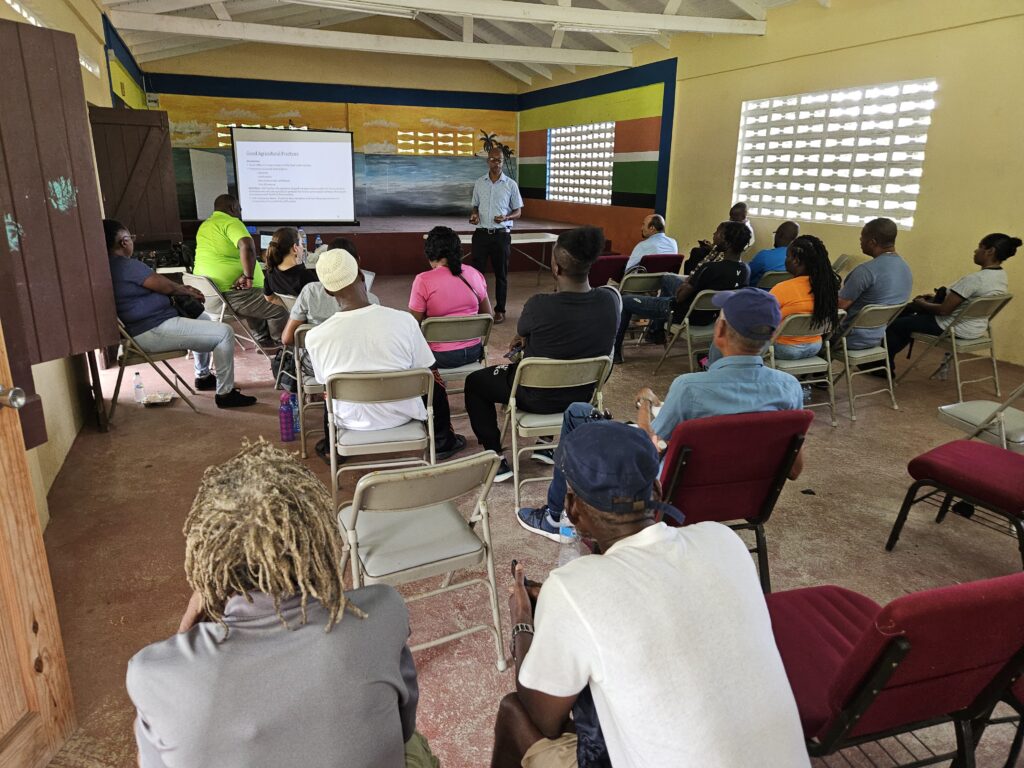
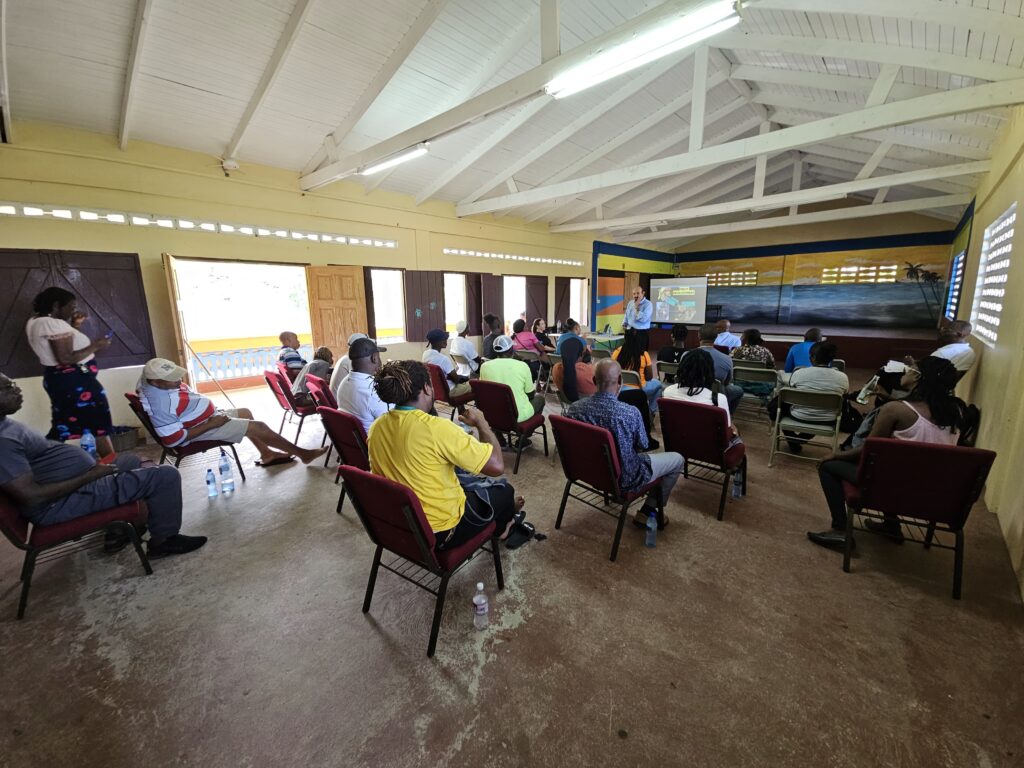
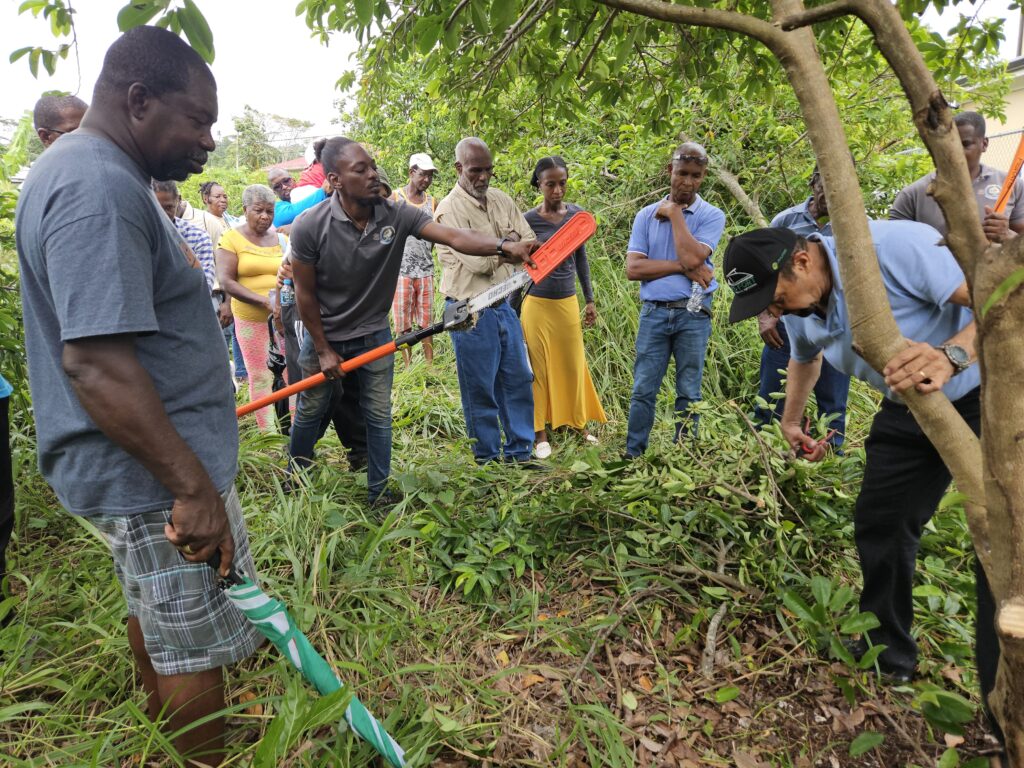
The latest instalment of the training programme was specifically tailored for farmers and trainers in the Western and Northern districts, as well as participants from previous sessions in St Andrew’s and St David’s. Special sessions were also organized for lessees of the Grand Bacolet Estate, reflecting the Strategic Upgrading Plan’s recommendation to involve new farmers and youth in value chain activities. The training provided a comprehensive overview of the soursop crop cycle, combining classroom lectures with practical field demonstrations. Topics covered included effective soil management techniques, tailored fertilization strategies, and best practices for orchard management. Farmers were also trained in essential pruning and hand pollination techniques to improve air circulation and fruit quality. Additionally, participants gained insights into the soursop market, trade opportunities, and the factors that enhance its viability as an export commodity.
Lead Technical Officer for the project, Mr Juan Cheaz Pelaez, FAO Trade and Markets Officer, shared some highlights about the recent trainings, “it was heartening to see both young and seasoned farmers from different parts of the country, eager to apply the techniques taught by our regional expert, Dr Abel Rebouças. The trainings were a small drop in a deeper bucket of actions needed to propel the value chain forward”. Mr Cheaz further stated that, “this training served as a model for future initiatives, illustrating how collaborative efforts can lead to structural changes within the industry. The continuity of this work will feed into ongoing and future projects, enabling a more programmatic approach to support the soursop sector’s growth”.
As the project has progressed, resources have been directed towards critical interventions identified in the Strategic Plan, such as these country-wide training sessions. Further actions will continue to be implemented by the government, private sector, and development partners. While the current phase of the value chain project approaches closure, new specialized projects have been conceptualized to address existing gaps, particularly in areas such as traceability, pest risk prevention, and phytosanitary measures. These initiatives are vital for maintaining the industry’s competitive edge and ensuring long-term economic viability, especially in preventing pest outbreaks that could disrupt trade.
As FAO concludes one critical area recommended for improvement in the Strategic Plan, a substantial programme for soursop remains to strengthen linkages between stakeholders, implementing continuous technical training for ministry extension officers and farmers on good agricultural practices, and developing demonstration plots to promote the uptake of techniques for improved cultivation. Additionally, there is a need for closer collaboration and increased investment from both the private and public sectors to strengthen data collection for sector analysis, sharing market information and improving requirements for export. With continued collaboration among value chain actors, Grenada is poised to enhance its soursop industry and maximize its potential in the global market.
Soursop farmers and technicians have engaged in a series of field and classroom training to improve and increase production and yields.
Grenada’s commitment to enhancing its agriculture sector has been supported by the Food and Agriculture Organization of the United Nations (FAO) through a joint initiative with the Ministry of Agriculture and Lands, Forestry and Marine Resources.
Through a project of FAO’s Technical Cooperation Programme aimed to bolster sustainable and competitive high-potential value chains using a collaborative development approach, FAO has trained farmers and technicians throughout Grenada in good agricultural practices for soursop production over the past months. Following months of analysis, a Strategic Upgrading Plan was developed with some of Grenada’s soursop stakeholders. The plan emphasizes targeted training for farmers and technical officers, upgrades to public nurseries, and the establishment of effective pest and disease management systems. These interventions aim to boost productivity, enhance produce quality, and ensure compliance with international standards.
Additionally, the plan seeks to foster climate resilience and innovation, laying the groundwork for sustainable growth within Grenada’s soursop industry.
Recent training sessions have played a crucial role in operationalizing these objectives, particularly in addressing the low levels of production and yields. It was found that the application of Good Agricultural Practices (GAP) is often minimal, particularly among small-scale operations. This training initiative sought to enhance production competencies and represents a significant step towards increasing the volumes necessary for export, aligning local production with market potential.
The latest instalment of the training programme was specifically tailored for farmers and trainers in the Western and Northern districts, as well as participants from previous sessions in St Andrew’s and St David’s. Special sessions were also organized for lessees of the Grand Bacolet Estate, reflecting the Strategic Upgrading Plan’s recommendation to involve new farmers and youth in value chain activities. The training provided a comprehensive overview of the soursop crop cycle, combining classroom lectures with practical field demonstrations. Topics covered included effective soil management techniques, tailored fertilization strategies, and best practices for orchard management. Farmers were also trained in essential pruning and hand pollination techniques to improve air circulation and fruit quality. Additionally, participants gained insights into the soursop market, trade opportunities, and the factors that enhance its viability as an export commodity.
Lead Technical Officer for the project, Mr Juan Cheaz Pelaez, FAO Trade and Markets Officer, shared some highlights about the recent trainings, “it was heartening to see both young and seasoned farmers from different parts of the country, eager to apply the techniques taught by our regional expert, Dr Abel Rebouças. The trainings were a small drop in a deeper bucket of actions needed to propel the value chain forward”. Mr Cheaz further stated that, “this training served as a model for future initiatives, illustrating how collaborative efforts can lead to structural changes within the industry. The continuity of this work will feed into ongoing and future projects, enabling a more programmatic approach to support the soursop sector’s growth”.
As the project has progressed, resources have been directed towards critical interventions identified in the Strategic Plan, such as these country-wide training sessions. Further actions will continue to be implemented by the government, private sector, and development partners. While the current phase of the value chain project approaches closure, new specialized projects have been conceptualized to address existing gaps, particularly in areas such as traceability, pest risk prevention, and phytosanitary measures. These initiatives are vital for maintaining the industry’s competitive edge and ensuring long-term economic viability, especially in preventing pest outbreaks that could disrupt trade.
As FAO concludes one critical area recommended for improvement in the Strategic Plan, a substantial programme for soursop remains to strengthen linkages between stakeholders, implementing continuous technical training for ministry extension officers and farmers on good agricultural practices, and developing demonstration plots to promote the uptake of techniques for improved cultivation. Additionally, there is a need for closer collaboration and increased investment from both the private and public sectors to strengthen data collection for sector analysis, sharing market information and improving requirements for export. With continued collaboration among value chain actors, Grenada is poised to enhance its soursop industry and maximize its potential in the global market.