/ Jul 29, 2026
Trending

News Elementor

RECENT NEWS

The Business of Slavery From Africa to the New World

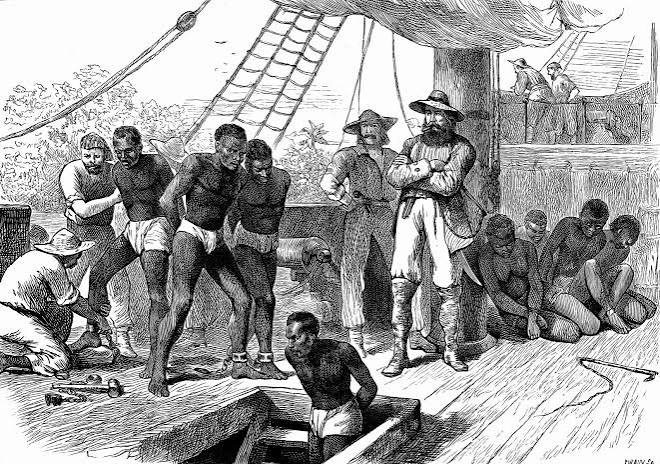
Part one of this series followed the business from the African coast to the ship. Part two followed it through the auction room to the banks and the compensation rolls that closed the books. Today we step back inside the enterprise while it ran, the plantation, and we begin, as this series keeps beginning, with a document.

Thomas Thistle wood arrived in Jamaica in 1750 as a plantation overseer and died there in 1786 as a small proprietor. For those thirty-six years he kept a diary, thirty-seven volumes of it, some two million words, now held at Yale University and inscribed in UNESCO’s Memory of the World register. It is the most complete record we possess of the men who actually ran the plantations, the middle managers of the system. And what does the middle manager record? Work assignments, provision allotments, his criteria for buying and selling people and illness and death rates. Thirty-four notebooks of weather, the punishments he inflicted, entered without comment. And his rapes of enslaved women, one hundred and thirty-eight of them across the diaries, recorded in the same flat notation as the rainfall. Historians who study Thistlewood stress that he was not an aberration, he was ordinary and that is the point of him. The horror of the plantation was not that it employed monsters but that it made monstrousness a job description with a salary, and the salary was accounted for.

Because here is what the plantation actually was, in business terms, the largest and most sophisticated private enterprise of its age. A Jamaican or Barbadian sugar estate placed two or three hundred workers under a single management, a scale almost no factory in Europe could match at the time. And sugar fused field and factory into one operation. Cut cane spoils within a day or two, so in crop time the mill and the boiling house ran through the night, in shifts, by the clock. Gangs were organized by task and capacity, first gang, second gang, children’s gang, each with its driver, work passing down the line. Historians of sugar have made the uncomfortable observation that the plantation invented industrial time-discipline before Manchester did. The factory system did not come to the Caribbean; it may have left here.

Above the field stood a management structure any modern firm would recognize. The owner, increasingly, was absent, in London or Bath, living on remitted income. His interests were held by an attorney on the island, customarily paid a commission on gross output, who supervised salaried overseers, who drove the gangs. There were printed management manuals, Thistlewood’s own papers include a copy of Richard Beckford’s Instructions for overseers of sugar plantations. And there was accounting, real accounting. Estates took annual inventories of the people they held, each valued in pounds, with columns for what the books called increase and decrease, births and deaths as movements in working capital. Scholars of management have shown that plantations practiced depreciation on human beings before industry had settled the concept for machines. In the American South, a planter could buy preprinted plantation account books with ruled columns for the cotton weighed and the people valued. On cotton estates the scale sat at the end of the row, and each picker’s weight was entered daily against their name. The overseer’s ledger, the driver’s tally, the attorney’s report, the London account current, information flowed up, discipline flowed down, it was a firm.

It was also a firm that shifted its costs with great ingenuity. In Jamaica, the enterprise largely declined to feed its workforce. The enslaved fed themselves, growing provisions on marginal ground in their so-called free time, and out of that necessity they built something remarkable, an internal market economy. Sunday markets, produce sold among themselves and to the whites, small money in enslaved hands. Thistlewood himself bought food from the people he tormented. Remember that the survival economy of the enslaved, the ground provisions and the Sunday market, the higglering that still feeds our region, began as the plantation’s cost-cutting measure and became our people’s first act of independent commerce.

The three great systems ran the model differently, as part two showed. Caribbean sugar ran high throughput and high mortality, replacing the people it consumed. The American South ran appreciation, its enslaved population compounding on the balance sheet. Brazil, in time, ran both. Its sugar engenhos of Bahia and Pernambuco were the original template, older than Barbados, its nineteenth-century coffee fazendas were the last great expansion, and after the Atlantic trade closed in 1850 an internal trade carried people south until the coffee provinces held some two-thirds of Brazil’s enslaved. But Brazil added an instrument the ledger loved manumission as a market. Enslaved people could, and in large numbers did, purchase their own freedom, sometimes by instalments. Freedom itself was priced, financed, and paid off like a mortgage, and by the final decades free people of colour far outnumbered the enslaved. Even the exit was monetized.

And the returns? The most careful long-run series we have, J. R. Ward’s study of British West Indian sugar accounts across nearly two centuries, puts average plantation profitability at roughly ten percent. The same ordinary, respectable, investable number we met on the slave ships. And if you doubt how respectable, consider the exhibit I have saved for last. From 1710, the Society for the Propagation of the Gospel in Foreign Parts, the missionary arm of the Church of England, with the Archbishop of Canterbury presiding over its councils, owned the Codrington plantations in Barbados, bequeathed to fund a theological college. People enslaved there were branded on the chest with the word SOCIETY. The estate’s own papers show it earning £2,472 a year in the 1820s on 359 enslaved people, a return of 7.7 percent. And on the ninth of May 1836, the Society filed with the compensation commissioners like any other proprietor and collected £8,558, two shillings and twopence, for 410 human beings. The Church apologized in 2006. In 2024 its mission society committed £7 million to the Codrington communities, which the Barbados reparations task force welcomed while noting, correctly, that it is not reparations. The theological college still stands on the estate and so does the arithmetic.

Every institution of the age, the bank, the insurer, the parliament, the church, found the plantation not merely tolerable but bankable. That is what a ten percent return does. It does not merely corrupt one man like Thistlewood; it enrols a civilization. The enslaved of his diary left almost no paper of their own. What they left instead was the provision ground, the Sunday market, the family reassembled against all odds, the culture that outlived the estate. Two economies grew on the same ground, one recorded in the ledgers and one carried in the people, and on the first of August 1838, only one of them proved permanent. Part four is about that day.

Part one of this series followed the business from the African coast to the ship. Part two followed it through the auction room to the banks and the compensation rolls that closed the books. Today we step back inside the enterprise while it ran, the plantation, and we begin, as this series keeps beginning, with a document.

Thomas Thistle wood arrived in Jamaica in 1750 as a plantation overseer and died there in 1786 as a small proprietor. For those thirty-six years he kept a diary, thirty-seven volumes of it, some two million words, now held at Yale University and inscribed in UNESCO’s Memory of the World register. It is the most complete record we possess of the men who actually ran the plantations, the middle managers of the system. And what does the middle manager record? Work assignments, provision allotments, his criteria for buying and selling people and illness and death rates. Thirty-four notebooks of weather, the punishments he inflicted, entered without comment. And his rapes of enslaved women, one hundred and thirty-eight of them across the diaries, recorded in the same flat notation as the rainfall. Historians who study Thistlewood stress that he was not an aberration, he was ordinary and that is the point of him. The horror of the plantation was not that it employed monsters but that it made monstrousness a job description with a salary, and the salary was accounted for.

Because here is what the plantation actually was, in business terms, the largest and most sophisticated private enterprise of its age. A Jamaican or Barbadian sugar estate placed two or three hundred workers under a single management, a scale almost no factory in Europe could match at the time. And sugar fused field and factory into one operation. Cut cane spoils within a day or two, so in crop time the mill and the boiling house ran through the night, in shifts, by the clock. Gangs were organized by task and capacity, first gang, second gang, children’s gang, each with its driver, work passing down the line. Historians of sugar have made the uncomfortable observation that the plantation invented industrial time-discipline before Manchester did. The factory system did not come to the Caribbean; it may have left here.

Above the field stood a management structure any modern firm would recognize. The owner, increasingly, was absent, in London or Bath, living on remitted income. His interests were held by an attorney on the island, customarily paid a commission on gross output, who supervised salaried overseers, who drove the gangs. There were printed management manuals, Thistlewood’s own papers include a copy of Richard Beckford’s Instructions for overseers of sugar plantations. And there was accounting, real accounting. Estates took annual inventories of the people they held, each valued in pounds, with columns for what the books called increase and decrease, births and deaths as movements in working capital. Scholars of management have shown that plantations practiced depreciation on human beings before industry had settled the concept for machines. In the American South, a planter could buy preprinted plantation account books with ruled columns for the cotton weighed and the people valued. On cotton estates the scale sat at the end of the row, and each picker’s weight was entered daily against their name. The overseer’s ledger, the driver’s tally, the attorney’s report, the London account current, information flowed up, discipline flowed down, it was a firm.

It was also a firm that shifted its costs with great ingenuity. In Jamaica, the enterprise largely declined to feed its workforce. The enslaved fed themselves, growing provisions on marginal ground in their so-called free time, and out of that necessity they built something remarkable, an internal market economy. Sunday markets, produce sold among themselves and to the whites, small money in enslaved hands. Thistlewood himself bought food from the people he tormented. Remember that the survival economy of the enslaved, the ground provisions and the Sunday market, the higglering that still feeds our region, began as the plantation’s cost-cutting measure and became our people’s first act of independent commerce.

The three great systems ran the model differently, as part two showed. Caribbean sugar ran high throughput and high mortality, replacing the people it consumed. The American South ran appreciation, its enslaved population compounding on the balance sheet. Brazil, in time, ran both. Its sugar engenhos of Bahia and Pernambuco were the original template, older than Barbados, its nineteenth-century coffee fazendas were the last great expansion, and after the Atlantic trade closed in 1850 an internal trade carried people south until the coffee provinces held some two-thirds of Brazil’s enslaved. But Brazil added an instrument the ledger loved manumission as a market. Enslaved people could, and in large numbers did, purchase their own freedom, sometimes by instalments. Freedom itself was priced, financed, and paid off like a mortgage, and by the final decades free people of colour far outnumbered the enslaved. Even the exit was monetized.

And the returns? The most careful long-run series we have, J. R. Ward’s study of British West Indian sugar accounts across nearly two centuries, puts average plantation profitability at roughly ten percent. The same ordinary, respectable, investable number we met on the slave ships. And if you doubt how respectable, consider the exhibit I have saved for last. From 1710, the Society for the Propagation of the Gospel in Foreign Parts, the missionary arm of the Church of England, with the Archbishop of Canterbury presiding over its councils, owned the Codrington plantations in Barbados, bequeathed to fund a theological college. People enslaved there were branded on the chest with the word SOCIETY. The estate’s own papers show it earning £2,472 a year in the 1820s on 359 enslaved people, a return of 7.7 percent. And on the ninth of May 1836, the Society filed with the compensation commissioners like any other proprietor and collected £8,558, two shillings and twopence, for 410 human beings. The Church apologized in 2006. In 2024 its mission society committed £7 million to the Codrington communities, which the Barbados reparations task force welcomed while noting, correctly, that it is not reparations. The theological college still stands on the estate and so does the arithmetic.

Every institution of the age, the bank, the insurer, the parliament, the church, found the plantation not merely tolerable but bankable. That is what a ten percent return does. It does not merely corrupt one man like Thistlewood; it enrols a civilization. The enslaved of his diary left almost no paper of their own. What they left instead was the provision ground, the Sunday market, the family reassembled against all odds, the culture that outlived the estate. Two economies grew on the same ground, one recorded in the ledgers and one carried in the people, and on the first of August 1838, only one of them proved permanent. Part four is about that day.

It is a long established fact that a reader will be distracted by the readable content of a page when looking at its layout. The point of using Lorem Ipsum is that it has a more-or-less normal distribution of letters, as opposed to using ‘Content here, content here’, making it look like readable English. Many desktop publishing packages and web page editors now use Lorem Ipsum as their default model text, and a search for ‘lorem ipsum’ will uncover many web sites still in their infancy.

It is a long established fact that a reader will be distracted by the readable content of a page when looking at its layout. The point of using Lorem Ipsum is that it has a more-or-less normal distribution of letters, as opposed to using ‘Content here, content here’, making it look like readable English. Many desktop publishing packages and web page editors now use Lorem Ipsum as their default model text, and a search for ‘lorem ipsum’ will uncover many web sites still in their infancy.

The point of using Lorem Ipsum is that it has a more-or-less normal distribution of letters, as opposed to using ‘Content here, content here’, making

The point of using Lorem Ipsum is that it has a more-or-less normal distribution of letters, as opposed to using ‘Content here, content here’, making it look like readable English. Many desktop publishing packages and web page editors now use Lorem Ipsum as their default model text, and a search for ‘lorem ipsum’ will uncover many web sites still in their infancy.

EmoNews Contributor

RECENT POSTS

CATEGORIES

Leave a Reply

Your email address will not be published. Required fields are marked *

SUBSCRIBE US

We’re excited to introduce Emonew, Dominica’s fresh new source for general country news. From community updates to national stories, we’re here to keep you informed, connected, and up to date.

Copyright Emonews 2025