/ Jun 09, 2026
Trending

News Elementor

RECENT NEWS

Latin America and the Caribbean Continues to Believe in Democracy but Demands More from It: UNDP

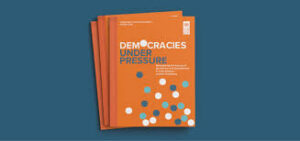
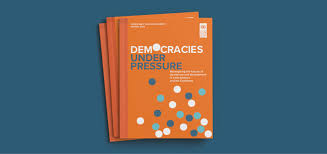
 Latin America and the Caribbean remains the most democratic developing region in the world. Yet the future of democracy increasingly depends on the State capacity to deliver inclusive human development, build resilience, and guarantee security amid growing uncertainty. These are among the findings of the United Nations Development Programme (UNDP) 2026 Regional Human Development Report, Democracies Under Pressure: Reimagining the Futures of Democracy and Development in Latin America and the Caribbean, presented today in Santo Domingo alongside President Luis Abinader and UNDP Regional Director for Latin America and the Caribbean, Michelle Muschett.

In this first presentation of the Report in the Caribbean, UNDP Regional Director emphasized that “the future of LAC depends on our collective ability to transform the pressure on our democracies into progress without sacrificing human agency and freedoms. This launch in the Dominican Republic advances a broader regional conversation—one that recognizes both the Caribbean’s remarkable democratic resilience and the complex pressures testing them. The gap between belief in democracy and unmet expectations calls for renewing the nexus between democracy, development and the State. UNDP will continue supporting governments and societies across the region to reimagine and build their own future”.  

The Report examines both the strengths and weaknesses of democracies in Latin America and the Caribbean, as well as the factors that are reshaping and, in many cases, straining their functioning, such as organized crime, political polarization, misinformation, and climate crisis. Its central message is a call to action: to protect democracies against the risk of erosion, while renewing them to respond to evolving citizens demands and expectations. The document incorporates Caribbean perspectives throughout and includes a dedicated chapter examining its distinctive democratic and development dynamics, while respecting the heterogeneity across the region.  

While Latin America has become one of the most polarized regions in the world, the Caribbean stands out for its notable social cohesion and democratic stability in the face of political division.  However, growing security challenges, greater vulnerability to external shocks, and tighter fiscal constraints, putting state capacity and democratic resilience to test. Homicide rate reaches 27.9 per 100,000 inhabitants in the Caribbean – above the regional average–with 59 percent of cases linked to organized crime.  At the same time, extreme climate events have doubled, rising from 5.2 per year (1960-1990) to 10.7 per year (2000-2023).  Public debt exceeds 100% of GDP in some Caribbean countries, undermining state capacity and eroding trust in democratic institutions. While 57% of people in the Caribbean continue to prefer democracy as the best form of government, only around 32% are satisfied with how democracy works in practice, revealing a widening gap between democratic support and institutional performance.

The Dominican Republic occupies a unique position as a structural and geopolitical bridge between Latin America and the Caribbean, reflecting many of the challenges identified in the report, but with particular strengths. It shares with Latin America an early experience of state-building and presidential systems of government, while, as a Small Island Developing State (SIDS), it faces many of the structural vulnerabilities characteristic of the Caribbean, including high exposure to climate shocks and constraints associated with limited territorial scale.

In this context, the country has made important advances in electoral democracy and political freedoms, standing out as a case of democratic deepening in times of increasing pressures on democracy. The country has also achieved significant progress in reducing poverty and inequality over the past two decades, although challenges remain in areas such as women’s political participation and ensuring that the benefits of development reach all segments of society. 

At the same time, digital transformation and artificial intelligence are identified as additional forces reshaping development pathways across the region. While these technologies introduce new risks — 76 percent of the population perceives that social media contains a significant or moderate amount of disinformation –, they also offer significant opportunities to expand access to services, improve productivity, strengthen civic participation, and promote inclusion, particularly for women and young people.

Ultimately, the report concludes that building more resilient, inclusive, and prosperous societies will require strengthening the connection between democratic governance, state capacity, and development outcomes, translating democratic achievements into tangible improvements in people’s lives.  

Democratic strengths in the Caribbean provide a strong foundation for addressing the complex challenges ahead, but its future will depend on the ability of its institutions to integrate economic resilience, climate change adaptation, and human security in an increasingly uncertain global environment. 

 Latin America and the Caribbean remains the most democratic developing region in the world. Yet the future of democracy increasingly depends on the State capacity to deliver inclusive human development, build resilience, and guarantee security amid growing uncertainty. These are among the findings of the United Nations Development Programme (UNDP) 2026 Regional Human Development Report, Democracies Under Pressure: Reimagining the Futures of Democracy and Development in Latin America and the Caribbean, presented today in Santo Domingo alongside President Luis Abinader and UNDP Regional Director for Latin America and the Caribbean, Michelle Muschett.

In this first presentation of the Report in the Caribbean, UNDP Regional Director emphasized that “the future of LAC depends on our collective ability to transform the pressure on our democracies into progress without sacrificing human agency and freedoms. This launch in the Dominican Republic advances a broader regional conversation—one that recognizes both the Caribbean’s remarkable democratic resilience and the complex pressures testing them. The gap between belief in democracy and unmet expectations calls for renewing the nexus between democracy, development and the State. UNDP will continue supporting governments and societies across the region to reimagine and build their own future”.  

The Report examines both the strengths and weaknesses of democracies in Latin America and the Caribbean, as well as the factors that are reshaping and, in many cases, straining their functioning, such as organized crime, political polarization, misinformation, and climate crisis. Its central message is a call to action: to protect democracies against the risk of erosion, while renewing them to respond to evolving citizens demands and expectations. The document incorporates Caribbean perspectives throughout and includes a dedicated chapter examining its distinctive democratic and development dynamics, while respecting the heterogeneity across the region.  

While Latin America has become one of the most polarized regions in the world, the Caribbean stands out for its notable social cohesion and democratic stability in the face of political division.  However, growing security challenges, greater vulnerability to external shocks, and tighter fiscal constraints, putting state capacity and democratic resilience to test. Homicide rate reaches 27.9 per 100,000 inhabitants in the Caribbean – above the regional average–with 59 percent of cases linked to organized crime.  At the same time, extreme climate events have doubled, rising from 5.2 per year (1960-1990) to 10.7 per year (2000-2023).  Public debt exceeds 100% of GDP in some Caribbean countries, undermining state capacity and eroding trust in democratic institutions. While 57% of people in the Caribbean continue to prefer democracy as the best form of government, only around 32% are satisfied with how democracy works in practice, revealing a widening gap between democratic support and institutional performance.

The Dominican Republic occupies a unique position as a structural and geopolitical bridge between Latin America and the Caribbean, reflecting many of the challenges identified in the report, but with particular strengths. It shares with Latin America an early experience of state-building and presidential systems of government, while, as a Small Island Developing State (SIDS), it faces many of the structural vulnerabilities characteristic of the Caribbean, including high exposure to climate shocks and constraints associated with limited territorial scale.

In this context, the country has made important advances in electoral democracy and political freedoms, standing out as a case of democratic deepening in times of increasing pressures on democracy. The country has also achieved significant progress in reducing poverty and inequality over the past two decades, although challenges remain in areas such as women’s political participation and ensuring that the benefits of development reach all segments of society. 

At the same time, digital transformation and artificial intelligence are identified as additional forces reshaping development pathways across the region. While these technologies introduce new risks — 76 percent of the population perceives that social media contains a significant or moderate amount of disinformation –, they also offer significant opportunities to expand access to services, improve productivity, strengthen civic participation, and promote inclusion, particularly for women and young people.

Ultimately, the report concludes that building more resilient, inclusive, and prosperous societies will require strengthening the connection between democratic governance, state capacity, and development outcomes, translating democratic achievements into tangible improvements in people’s lives.  

Democratic strengths in the Caribbean provide a strong foundation for addressing the complex challenges ahead, but its future will depend on the ability of its institutions to integrate economic resilience, climate change adaptation, and human security in an increasingly uncertain global environment. 
It is a long established fact that a reader will be distracted by the readable content of a page when looking at its layout. The point of using Lorem Ipsum is that it has a more-or-less normal distribution of letters, as opposed to using ‘Content here, content here’, making it look like readable English. Many desktop publishing packages and web page editors now use Lorem Ipsum as their default model text, and a search for ‘lorem ipsum’ will uncover many web sites still in their infancy.

It is a long established fact that a reader will be distracted by the readable content of a page when looking at its layout. The point of using Lorem Ipsum is that it has a more-or-less normal distribution of letters, as opposed to using ‘Content here, content here’, making it look like readable English. Many desktop publishing packages and web page editors now use Lorem Ipsum as their default model text, and a search for ‘lorem ipsum’ will uncover many web sites still in their infancy.

The point of using Lorem Ipsum is that it has a more-or-less normal distribution of letters, as opposed to using ‘Content here, content here’, making

The point of using Lorem Ipsum is that it has a more-or-less normal distribution of letters, as opposed to using ‘Content here, content here’, making it look like readable English. Many desktop publishing packages and web page editors now use Lorem Ipsum as their default model text, and a search for ‘lorem ipsum’ will uncover many web sites still in their infancy.

EmoNews Contributor

RECENT POSTS

CATEGORIES

Leave a Reply

Your email address will not be published. Required fields are marked *

SUBSCRIBE US

We’re excited to introduce Emonew, Dominica’s fresh new source for general country news. From community updates to national stories, we’re here to keep you informed, connected, and up to date.

Copyright Emonews 2025