/ Jun 09, 2026
Trending
Emonews
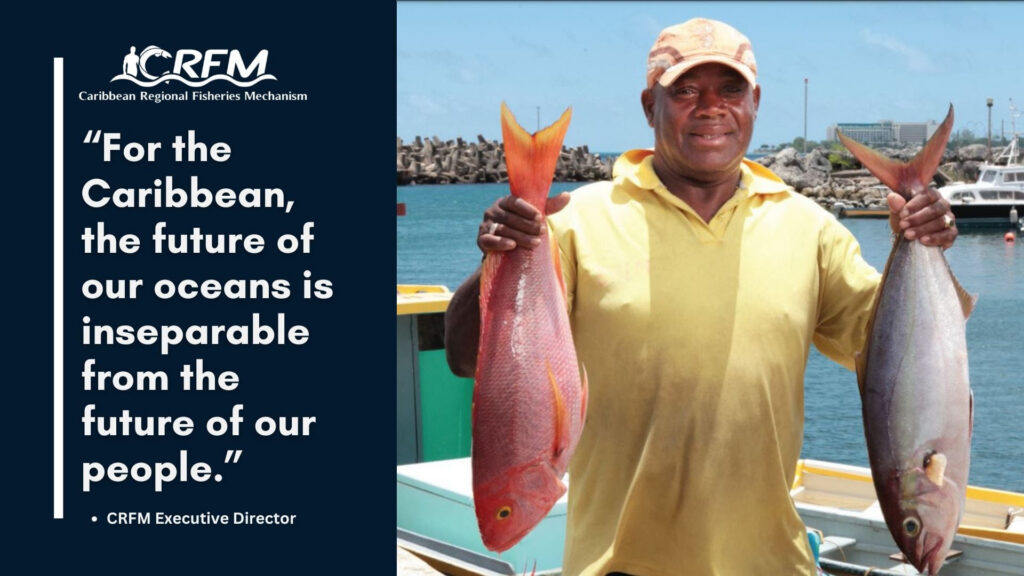
| Today, as we observe World Ocean Day, we are reminded that the Caribbean Sea and our surrounding oceans are not only a source of natural beauty but also the foundation of livelihoods, culture, food security, and economic opportunity for millions of people across our region. The theme of ocean stewardship has never been more important. For the Caribbean, the future of our oceans is inseparable from the future of our people. Healthy marine ecosystems support fisheries, tourism, transportation, coastal protection, and countless other services that sustain our economies and communities. As we celebrate this day, we must reaffirm our collective commitment to safeguarding our marine resources for present and future generations. Small-scale fisheries remain the backbone of the fisheries sector in most Caribbean countries. Thousands of fishers, fish vendors, processors, and their families depend directly on the sea for their livelihoods and well-being. These fisheries contribute significantly to local food supplies, employment, poverty reduction, and cultural heritage. As global food systems face mounting pressures from climate change, economic uncertainty, and supply chain disruptions, investing in sustainable small-scale fisheries is essential to strengthening regional food and nutrition security. We must continue to empower fishing communities through improved management, access to finance, modern technology, capacity building, and policies that recognize their invaluable contributions to national and regional development. At the same time, the Caribbean has tremendous opportunities to expand sustainable mariculture and aquaculture as part of a diversified Blue Economy. Responsible mariculture can increase domestic seafood production, reduce reliance on imports, create jobs, attract investment, and build resilience to climate-related shocks. Through innovation, science-based planning, and effective marine spatial management, we can unlock new opportunities in marine fish farming, seaweed cultivation, shellfish production, and other ocean-based industries while safeguarding marine biodiversity. The CRFM remains committed to supporting Member States in advancing sustainable Blue Economy initiatives that balance economic growth, environmental stewardship, and social inclusion. However, the promise of our oceans cannot be realized if marine pollution continues to endanger our ecosystems. Plastic waste, abandoned fishing gear, land-based runoff, wastewater discharge, and other pollutants are degrading coastal habitats, damaging coral reefs, threatening marine life, and undermining fisheries productivity. Addressing marine pollution requires action by governments, businesses, communities, and individuals alike. On this World Ocean Day 2026, let us renew our commitment to reducing pollution at its source, strengthening waste management systems, promoting sustainable consumption, and protecting the marine environment on which our prosperity depends. Together, we can build a cleaner, healthier, and more resilient Caribbean Sea that continues to nourish our people, support our economies, and inspire future generations. |
| Today, as we observe World Ocean Day, we are reminded that the Caribbean Sea and our surrounding oceans are not only a source of natural beauty but also the foundation of livelihoods, culture, food security, and economic opportunity for millions of people across our region. The theme of ocean stewardship has never been more important. For the Caribbean, the future of our oceans is inseparable from the future of our people. Healthy marine ecosystems support fisheries, tourism, transportation, coastal protection, and countless other services that sustain our economies and communities. As we celebrate this day, we must reaffirm our collective commitment to safeguarding our marine resources for present and future generations. Small-scale fisheries remain the backbone of the fisheries sector in most Caribbean countries. Thousands of fishers, fish vendors, processors, and their families depend directly on the sea for their livelihoods and well-being. These fisheries contribute significantly to local food supplies, employment, poverty reduction, and cultural heritage. As global food systems face mounting pressures from climate change, economic uncertainty, and supply chain disruptions, investing in sustainable small-scale fisheries is essential to strengthening regional food and nutrition security. We must continue to empower fishing communities through improved management, access to finance, modern technology, capacity building, and policies that recognize their invaluable contributions to national and regional development. At the same time, the Caribbean has tremendous opportunities to expand sustainable mariculture and aquaculture as part of a diversified Blue Economy. Responsible mariculture can increase domestic seafood production, reduce reliance on imports, create jobs, attract investment, and build resilience to climate-related shocks. Through innovation, science-based planning, and effective marine spatial management, we can unlock new opportunities in marine fish farming, seaweed cultivation, shellfish production, and other ocean-based industries while safeguarding marine biodiversity. The CRFM remains committed to supporting Member States in advancing sustainable Blue Economy initiatives that balance economic growth, environmental stewardship, and social inclusion. However, the promise of our oceans cannot be realized if marine pollution continues to endanger our ecosystems. Plastic waste, abandoned fishing gear, land-based runoff, wastewater discharge, and other pollutants are degrading coastal habitats, damaging coral reefs, threatening marine life, and undermining fisheries productivity. Addressing marine pollution requires action by governments, businesses, communities, and individuals alike. On this World Ocean Day 2026, let us renew our commitment to reducing pollution at its source, strengthening waste management systems, promoting sustainable consumption, and protecting the marine environment on which our prosperity depends. Together, we can build a cleaner, healthier, and more resilient Caribbean Sea that continues to nourish our people, support our economies, and inspire future generations. |
It is a long established fact that a reader will be distracted by the readable content of a page when looking at its layout. The point of using Lorem Ipsum is that it has a more-or-less normal distribution of letters, as opposed to using ‘Content here, content here’, making it look like readable English. Many desktop publishing packages and web page editors now use Lorem Ipsum as their default model text, and a search for ‘lorem ipsum’ will uncover many web sites still in their infancy.
The point of using Lorem Ipsum is that it has a more-or-less normal distribution of letters, as opposed to using ‘Content here, content here’, making
The point of using Lorem Ipsum is that it has a more-or-less normal distribution of letters, as opposed to using ‘Content here, content here’, making it look like readable English. Many desktop publishing packages and web page editors now use Lorem Ipsum as their default model text, and a search for ‘lorem ipsum’ will uncover many web sites still in their infancy.
We’re excited to introduce Emonew, Dominica’s fresh new source for general country news. From community updates to national stories, we’re here to keep you informed, connected, and up to date.
Copyright Emonews 2025