/ Jul 24, 2026
Trending
OECS Delegation Visits Martinique and Guadeloupe to Learn Sargassum Management Solutions
A delegation from nine Caribbean states and territories that are members of the Organisation of Eastern Caribbean States (OECS) is participating in a regional study mission in Martinique and Guadeloupe from June 1 to 4, 2026, aimed at strengthening the Caribbean’s response to the growing sargassum challenge.
The mission, supported by the European Union and the OECS, is designed to facilitate knowledge sharing and promote regional cooperation in addressing the environmental, economic, and public health impacts associated with recurring sargassum influxes.
Since 2011, large volumes of sargassum seaweed have affected coastlines across the Caribbean, impacting marine ecosystems, biodiversity, tourism, fisheries, and coastal communities. In response, Martinique and Guadeloupe have developed innovative approaches to monitoring, collection, risk management, and the development of value-added uses for sargassum.
During the four-day mission, delegates will visit several sites in Martinique and Guadeloupe to observe these initiatives firsthand, engage with technical experts, and explore opportunities for greater regional collaboration.
Activities in Martinique on June 1 and 2 include visits to offshore containment barriers and collection barges in Le François, monitoring sites managed by Madininair, and presentations on early-warning and monitoring systems. Delegates will also visit manual collection sites in Le Vauclin and tour Holdex, a company involved in developing innovative products and value-added uses from sargassum.
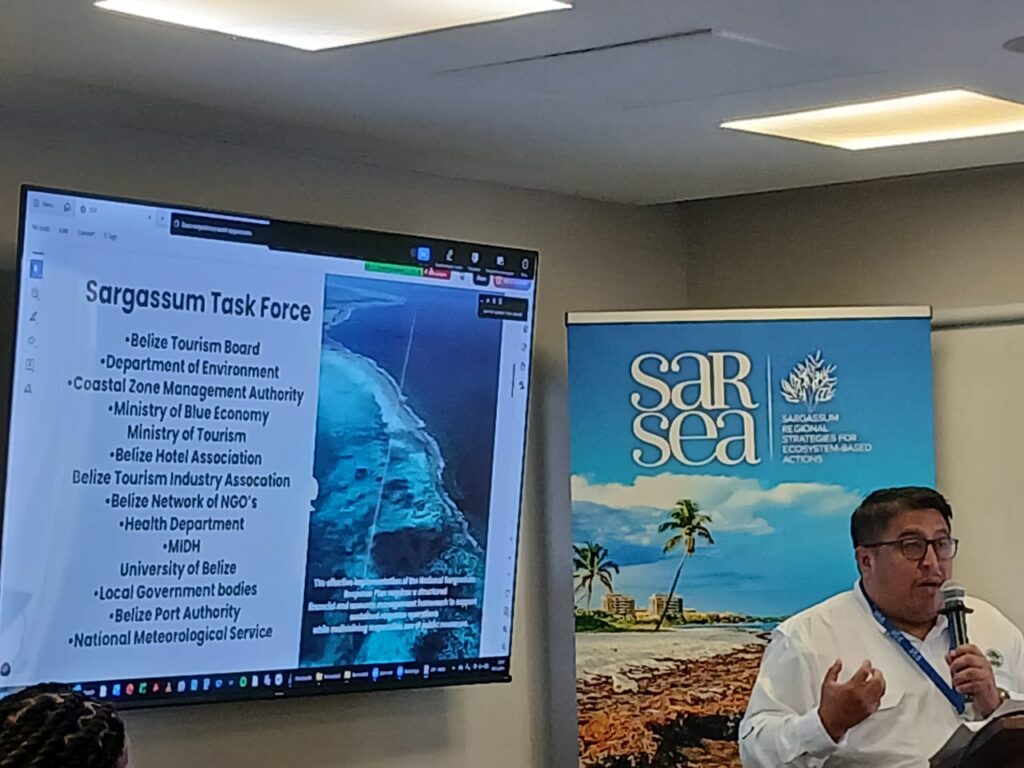
The mission is being conducted under the SARSEA project, funded by the Agence Française de Développement (AFD) and implemented by Expertise France and the OECS Commission. The project seeks to strengthen technical capacity, governance systems, and ecosystem-based approaches to sargassum management across the Caribbean.
Organizers say the initiative reflects a strong commitment to regional cooperation, solidarity, and innovation as Caribbean territories work together to address a challenge that transcends national boundaries.
As one OECS representative participating in the mission noted, “Sargassum does not recognize borders. By combining our knowledge, expertise and resources, we can better protect our coastlines, our economies and our communities.”
The mission is co-organized by the OECS, the European Union through its Global Gateway Programme, and the local authorities of Martinique and Guadeloupe, with technical support from Expertise France and the Agence Française de Développement.
OECS Delegation Visits Martinique and Guadeloupe to Learn Sargassum Management Solutions
A delegation from nine Caribbean states and territories that are members of the Organisation of Eastern Caribbean States (OECS) is participating in a regional study mission in Martinique and Guadeloupe from June 1 to 4, 2026, aimed at strengthening the Caribbean’s response to the growing sargassum challenge.
The mission, supported by the European Union and the OECS, is designed to facilitate knowledge sharing and promote regional cooperation in addressing the environmental, economic, and public health impacts associated with recurring sargassum influxes.
Since 2011, large volumes of sargassum seaweed have affected coastlines across the Caribbean, impacting marine ecosystems, biodiversity, tourism, fisheries, and coastal communities. In response, Martinique and Guadeloupe have developed innovative approaches to monitoring, collection, risk management, and the development of value-added uses for sargassum.
During the four-day mission, delegates will visit several sites in Martinique and Guadeloupe to observe these initiatives firsthand, engage with technical experts, and explore opportunities for greater regional collaboration.
Activities in Martinique on June 1 and 2 include visits to offshore containment barriers and collection barges in Le François, monitoring sites managed by Madininair, and presentations on early-warning and monitoring systems. Delegates will also visit manual collection sites in Le Vauclin and tour Holdex, a company involved in developing innovative products and value-added uses from sargassum.
The mission is being conducted under the SARSEA project, funded by the Agence Française de Développement (AFD) and implemented by Expertise France and the OECS Commission. The project seeks to strengthen technical capacity, governance systems, and ecosystem-based approaches to sargassum management across the Caribbean.
Organizers say the initiative reflects a strong commitment to regional cooperation, solidarity, and innovation as Caribbean territories work together to address a challenge that transcends national boundaries.
As one OECS representative participating in the mission noted, “Sargassum does not recognize borders. By combining our knowledge, expertise and resources, we can better protect our coastlines, our economies and our communities.”
The mission is co-organized by the OECS, the European Union through its Global Gateway Programme, and the local authorities of Martinique and Guadeloupe, with technical support from Expertise France and the Agence Française de Développement.