/ Aug 24, 2026
Trending
Shrinking pools of international development assistance are leaving regional civil society organisations in search of an oasis.
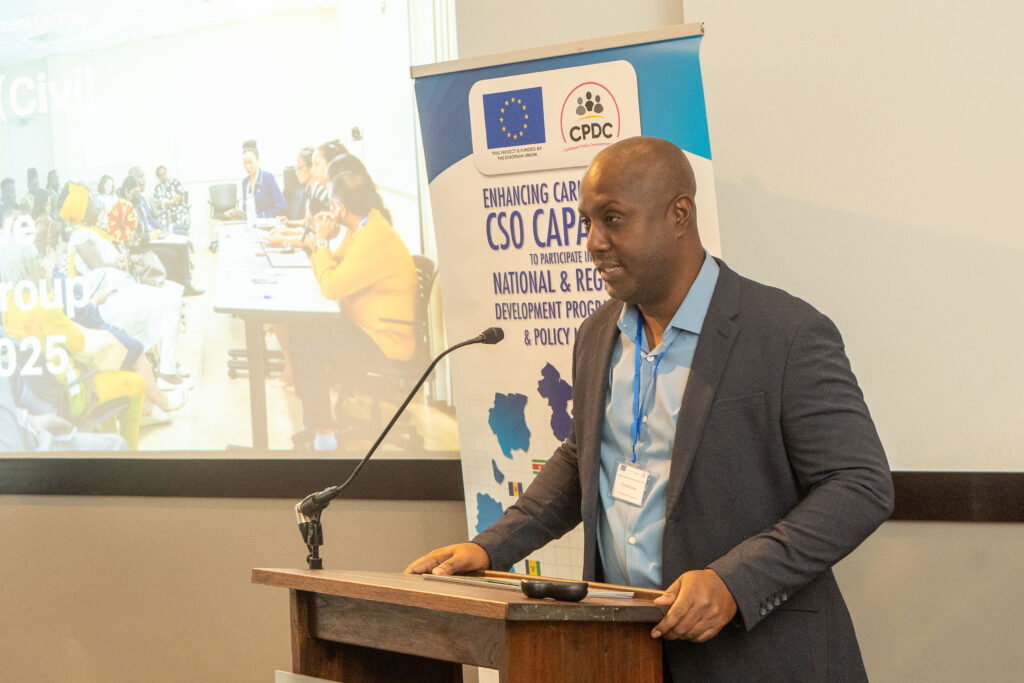
Executive Director of the Caribbean Policy Development Centre, Richard Jones, called attention to this “pressing issue” while addressing the Caribbean (Civil Society) Consultative Working Group (CCWG) meeting, held at The Brix Hotel in Trinidad and Tobago recently.
“Major donors such as USAID and several European governments have significantly reduced their commitments to global development, choosing instead to focus on domestic priorities, national security or geopolitical crises elsewhere. These decisions, while understandable from a national perspective, have direct and painful consequences for our region,” he told the representatives from regional organizations in attendance.
“At the Caribbean Policy Development Centre, we have already felt this deeply, losing over US$200,000 in programme and project funding in just the past three months alone. This is not just a number; it translates to fewer services, fewer outreach programmes, fewer lives impacted. Across the region, similar stories are playing out. Organisations are being forced to scale down and postpone initiatives, or, in some cases, shut their doors. We are witnessing a slow erosion of the very ecosystem that supports Caribbean people in some of their most trying moments.”
Jones added that even in the face of the “escalating threat” of climate change, the region is experiencing a “notable decline” in climate adaptation funding targeted at vulnerable groups.
“This is especially troubling because these communities—often rural, coastal, or Indigenous—are the least equipped to absorb shocks, and the least represented in decision-making,” the social development expert continued.
Jones urged the delegates to seek out diversified funding sources, including private sector
entities, and diaspora communities. He also encouraged those in attendance to stay true to their identity as a Caribbean NGO sector.
“Too often, our narrative is written from the outside, framed by donor priorities or international benchmarks. But we know that our experiences, solutions, and contributions are unique and worthy of documentation and celebration.”
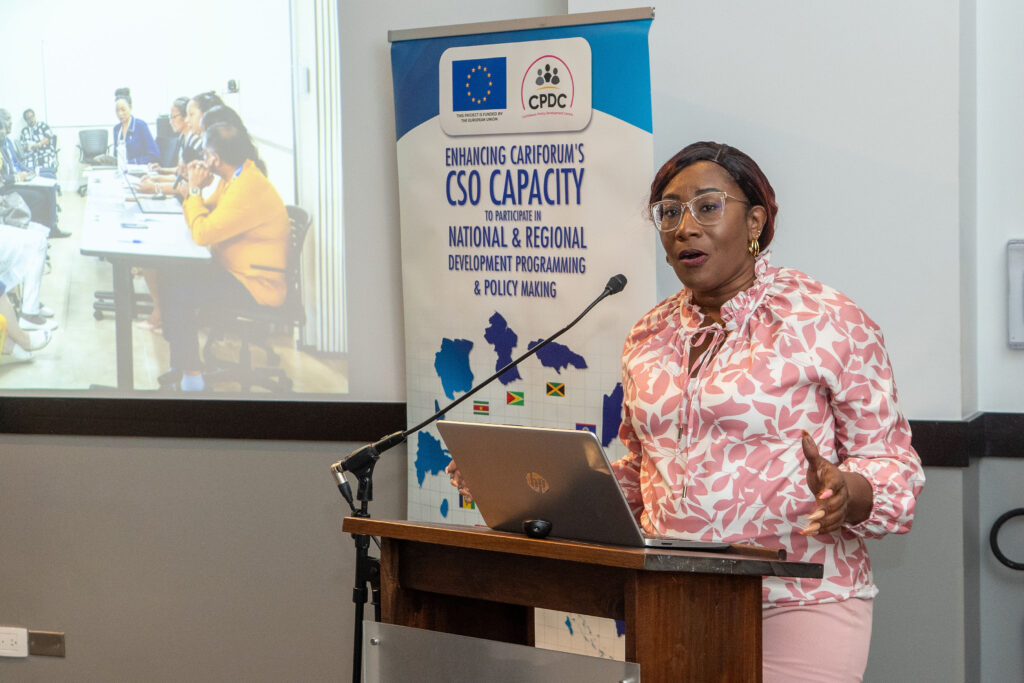
Held over two days, the CCWG meeting convened stakeholders in the Caribbean third sector to share research and insights on key social and developmental issues facing the region, such as soaring debt levels, climate change, youth and crime.
It was funded by the European Union, in partnership with CPDC, the CARIFORUM Directorate and the Open Society Foundations (OSF).
Shrinking pools of international development assistance are leaving regional civil society organisations in search of an oasis.
Executive Director of the Caribbean Policy Development Centre, Richard Jones, called attention to this “pressing issue” while addressing the Caribbean (Civil Society) Consultative Working Group (CCWG) meeting, held at The Brix Hotel in Trinidad and Tobago recently.
“Major donors such as USAID and several European governments have significantly reduced their commitments to global development, choosing instead to focus on domestic priorities, national security or geopolitical crises elsewhere. These decisions, while understandable from a national perspective, have direct and painful consequences for our region,” he told the representatives from regional organizations in attendance.
“At the Caribbean Policy Development Centre, we have already felt this deeply, losing over US$200,000 in programme and project funding in just the past three months alone. This is not just a number; it translates to fewer services, fewer outreach programmes, fewer lives impacted. Across the region, similar stories are playing out. Organisations are being forced to scale down and postpone initiatives, or, in some cases, shut their doors. We are witnessing a slow erosion of the very ecosystem that supports Caribbean people in some of their most trying moments.”
Jones added that even in the face of the “escalating threat” of climate change, the region is experiencing a “notable decline” in climate adaptation funding targeted at vulnerable groups.
“This is especially troubling because these communities—often rural, coastal, or Indigenous—are the least equipped to absorb shocks, and the least represented in decision-making,” the social development expert continued.
Jones urged the delegates to seek out diversified funding sources, including private sector
entities, and diaspora communities. He also encouraged those in attendance to stay true to their identity as a Caribbean NGO sector.
“Too often, our narrative is written from the outside, framed by donor priorities or international benchmarks. But we know that our experiences, solutions, and contributions are unique and worthy of documentation and celebration.”
Held over two days, the CCWG meeting convened stakeholders in the Caribbean third sector to share research and insights on key social and developmental issues facing the region, such as soaring debt levels, climate change, youth and crime.
It was funded by the European Union, in partnership with CPDC, the CARIFORUM Directorate and the Open Society Foundations (OSF).